Chen Haohui
Partner at Blue Lake Capital
“Having frequently invested in cross-border e-commerce firms in recent years, Blue Lake Capital has seen rapid growth in the cross-border e-commerce sector, especially for stand-alone e-shops. Cross-border e-commerce is the way for Chinese companies to transform themselves from ‘manufacturers’ to ‘brands’ and global value chains. There is enormous space for growth for Chinese sellers using cross-border stand-alone e-shops. In Europe and the US, the GMV (gross merchandise value) of stand-alone e-shops accounts for about 20% of the e-commerce market. Despite stand-alone e-shops being a major force in e-commerce in Europe and the US, Chinese sellers possess only 2-3% of all stand-alone e-shops in the two markets, leaving room for further market penetration. With more players coming into the game, competition becoming increasingly fierce, and advertising costs continuously rising, delicacy management and attention to detail have become the key to success. Having sensed this opportunity, shopastro is now transferring its professional e-shop building, advertising, and marketing capabilities into comprehensive solutions for stand-alone e-shop management for cross-border sellers.”
shopastro, a full-chain service provider for Chinese brands operating in overseas markets, has recently received over $10 million in series A financing. The leading investors were GL Ventures and a major USD fund, while its angel investors, Blue Lake Capital and Shenjin Capital, also joined in the round.
The funds raised will be used for talent acquisition, improvements to operations and services teams, and national market development. The company plans to continuously improve its Baijing intelligent marketing tool by accumulating data, building better models, providing more diverse and intelligent marketing strategies, and covering more links in the value chain.
Over the past few years, cross-border e-commerce has been booming and the infrastructure construction has progressively improved. With Chinese supply chains growing mature, companies hoping to go global are shifting from a low-price strategy to brand-building. However, difficulties exist in overseas markets not only in consumer education, but also in advertising and traffic acquisition.
On one hand, confused positioning in terms of target users, product categories, and media channels often leads to “vain attempts” at advertising and unsatisfactory conversion rates. On the other hand, with so many service packages to choose from, it is a challenge for brands to decide on the optimum solutions, and they may become frustrated from repeatedly taking wrong paths regarding costs and advertising practices.
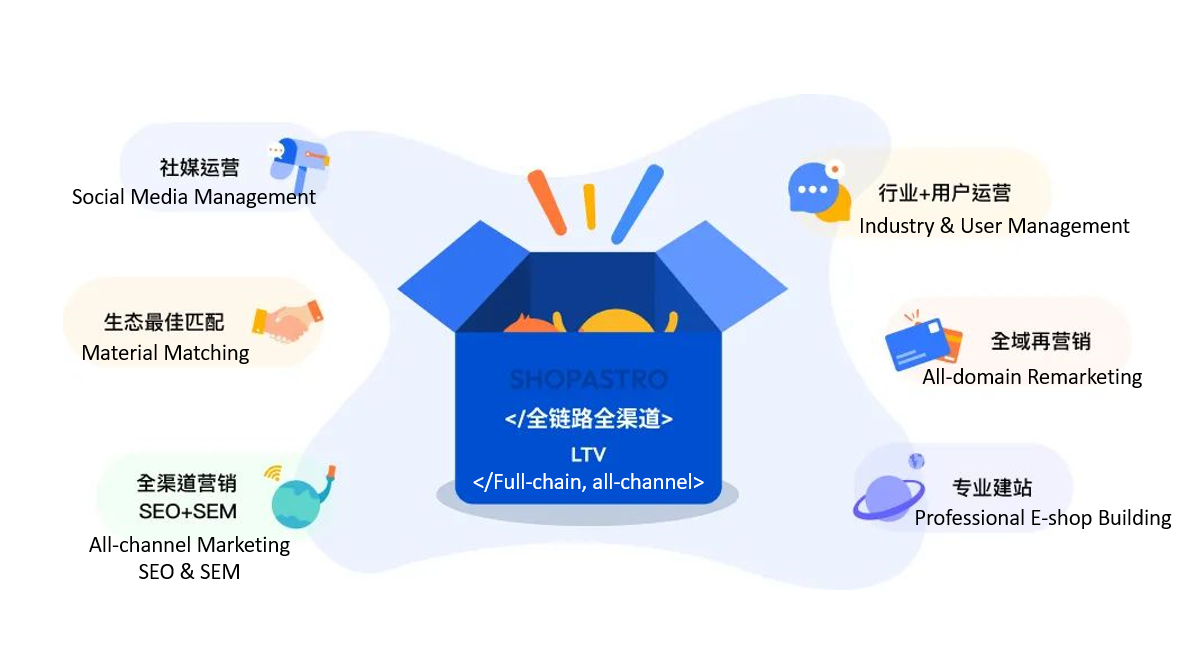
Therefore, this marketing need provides a great opportunity for SaaS providers specializing in building stand-alone e-shops. Established in 2021, shopastro provides one-stop, full-chain solutions for brands seeking to expand their business overseas, with stand-alone e-shop building at the core of each service package. Meanwhile, with big data and AI technologies, it helps sellers to refine their operations and increase traffic conversion rates. Headquartered in Hangzhou, with branches in Yiwu, Shenzhen and Xiamen, shopastro has now provided services to over 100 enterprise clients.
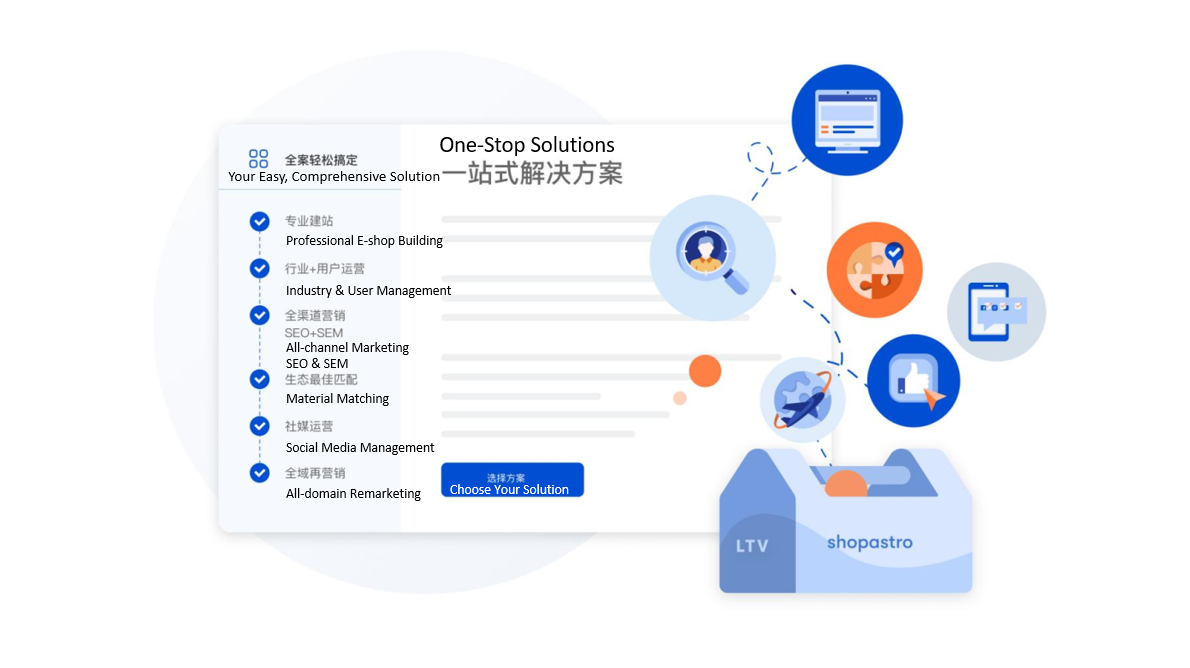
Specifically, unlike many of the homogeneous products on the market, shopastro’s service products are superior in two aspects: First, they cover a complete electronic transaction system. According to Liu Qingfu, founder and CEO of the company, shopastro’s transaction system covers multiple eco-systems including logistics, payment and ERP, which means an open design since the initial stage of the platform building. With various standard APIs, the system is accessible to service providers from different sectors involved in the cross-border business. Second, they include Baijing, an intelligent marketing SaaS, which, based on AI algorithms and big data, can generate high-conversion materials and match them with suitable market regions, media channels, and target groups according to each seller’s category and positioning. “Take children’s wear brands for example. Children’s wear has high repeat purchase rates, and thus the key in this sector is to educate customers. And based on our data and algorithms, we have stratified all our users so that we can choose different traffic and marketing tactics aimed at different strata,” said Liu Qingfu. Meanwhile, all shopastro data can form closed loops on Google, Facebook and TikTok. In Liu Qingfu’s opinion,the key to going global for a brand lies in the growth of its customer LTV (lifetime value). Marketing is a labor-intensive practice, but the Baijing intelligent system is equipped to handle it.
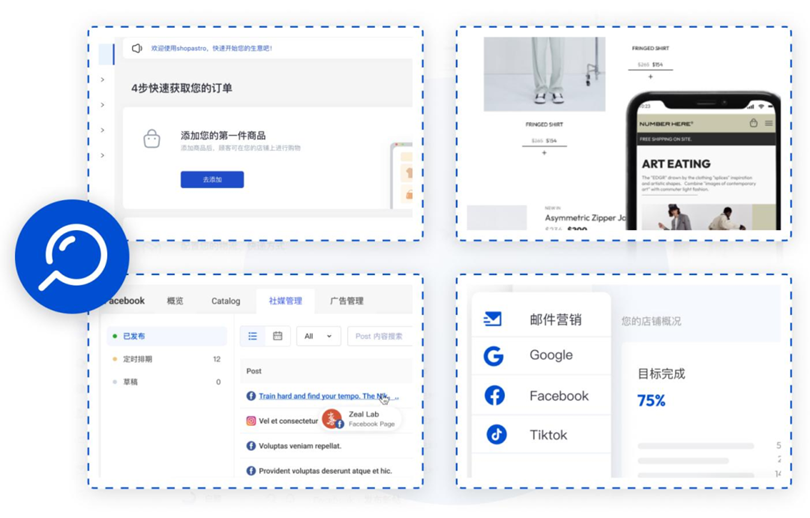
“In the current stage, traffic acquisition and advertising in overseas markets is still labor-intensive, and with high employee turnover, the labor costs are pretty high. Moreover, the data gained from manual operations usually doesn’t accumulate. Therefore, advertising based on AI algorithms and big data can help sellers accumulate data and close the loop. This type of advertising is more accurate in terms of matching materials with categories and platforms.” Regarding future development, Liu Qingfu observes that more and more traditional sellers and factories are transforming themselves into branded sellers, and many Chinese brands involved with new forms of consumption are going global, which means their service providers must be good investments with long-term value. Going global requires facilitation from multiple ecosystems, and the stand-alone e-shop is just one of the many channels. At the end of the day, the key is to educate overseas consumers to increase customer LTV.
In terms of personnel, shopastro’s founding team consists of ex-members of management teams from Alibaba, ByteDance, and Baidu. Its core members came from Alibaba International, AliExpress, ByteDance, Baidu, Ant Group and more, including P8 and P9 members of Alibaba’s product, operations, design, and tech departments. Many of shopastro’s team members have over 10 years of product development, operations, and commercialization experience in the fields cross-border e-commerce, payment, and SaaS. The lead of the shopastro project at GL Ventures (the leading investor in this round of fundraising) told us that “the one-stop, full-chain services shopastro provides to Chinese companies going global combines stand-alone e-shop building with marketing while solving sellers’ main problems during the process, such as traffic acquisition, marketing and customer retention. They are different from other homogeneous products and services available on the market. shopastro is highly capable of independent R&D and serving its clients throughout the user life cycle. It knows what sellers need and knows overseas markets well. We expect shopastro to meet Chinese sellers’ specific demands in their expansion to overseas markets and become an excellent local service provider for Chinese brands going global.”
Blue Lake Capital, likewise, has noticed the historic opportunity behind the surging demands for stand-alone e-shop building in overseas markets. They believe that shopastro can transfer their professional capabilities in e-shop building, advertising, and marketing into their service products and serve cross-border sellers with stand-alone e-shop management solutions. Having been well-received by sellers upon launch, shopastro’s products have proved to meet the market demands. Blue Lake Capital is optimistic about the long-term prospect of shopastro’s professional team in the cross-border field. As a research-driven venture capital fund of the new generation, Blue Lake Capital pays attention to technological innovators contributing to China’s digital transformation and upgrading. The company has extensively deployed its investments in the SaaS and cloud software field. Its portfolio includes JST, Lingxin, Leyan Technologies, Helios and Going-link.

The end of the year of the ox saw the Blue Lake Capital Investor Conference of 2022. Upon invitation, three entrepreneurs specializing in manufacturing SaaS—Wang Pei, Chairman of Zhenyun Technology; Wang Zhongtian, CEO of FS Cloud; and Zheng Xiangtian, CEO of Zone Science and Technology Co., Ltd.—were present to share their experiences in delivering brilliant SaaS products focusing on the integration of manufacturing and software in procurement, after-sales, and collaboration.
Together with Zhang Yifan, the Investment Director of Blue Lake Capital who has years of involvement in SaaS, they had a talk about three hot topics among SaaS practitioners.
- What are excellent entrepreneurs doing differently to achieve better at customer satisfaction?
- Will SaaS products end up being homogenized? And what contributes to competitive products amidst the prevailing copycat culture?
- How can SaaS entrepreneurs who are targeting large enterprises shatter the stereotypes about standardized and/or personalized products?

The answers all come back to customer satisfaction.
Zhang Yifan: SaaS is such a hot vertical as more and more investors have realized the inherent advantage in its business model: high renewal rate. Indeed, this situation depends on companies’ dedication to customer satisfaction. During our usual conversations with CEOs, they will claim that they have a great emphasis on customer satisfaction. However, due diligence reveals that their actions actually vary greatly. There is a gap between many CEOs’ statements, the actual implementation of frontline employees, and the corporate culture. The process may require specific mechanisms and methods. So, can you share your experience and strategies to improve customer satisfaction?
Wang Pei: Here’s a story for you. We once received job applications from many employees from an SaaS company. When interviewing them, we would ask why they left, because this company had just finished financing and was in a great vertical market. They left that company as a result of its low customer satisfaction. They all replied, “Our current project has too low customer satisfaction to be launched, and we failed to settle it. It is too stressful and hopeless.” Upon deeper inquiry into the reason, it turned out that the company’s R&D personnel were assigned to new projects that were of interest to the boss, leaving no one to solve product issues. As a result, many other projects were affected, leading to a vicious cycle. Customers would be naturally less satisfied, and employees would feel hopeless. So we can see that no matter how you emphasize customer satisfaction, if you follow the wrong approach to take care of it, the outcome won’t be positive.
So customer satisfaction can be a highly complex issue or a simple one, which requires an eye only on two core points: First, provide adequate service. To serve enterprises in terms of SaaS, well-qualified consultants need to straighten out customer demands to facilitate the progress of projects as planned. Second, ensure product stability to enable rapid iterations to satisfy customers. Zhenyun has now signed contracts with 200+ customers, and this figure will reach 400+ next year. Failure to stabilize the logic and mechanism will certainly affect customer satisfaction. This is how we understand customer satisfaction. We may be all well aware of the core point, but the difference lies in whether we persist or not.
Wang Zhongtian: It is pretty challenging to score high in customer satisfaction. We should first make it a corporate culture. Employees need to be committed to customer satisfaction, to smooth the process from customer engagement to successful delivery, then to the continuous and stable operation of the system delivered. Things will be streamlined if such a culture is in place. Otherwise, there is inconsistency between the sales team, the consultants, and the customers. Everyone focuses on their own concerns, leading them to fail to realize the actual goal. In the case of signing contracts, for example, customers may expand their needs. If there is no such culture, the sales team will overpromise. We often find that our customers signed contracts with others at a meager price, who promised that they could solve anything. However, the customers would finally come to us for solutions. When signing contracts, our sales staff will inform the customers what we can or can’t solve. And the contracts will be reviewed by a consultant. In this way, we can ensure all the orders signed are in line with our product’s future development path without upsetting the pace of the R&D department.
Moreover, new requirements may arise regarding the delivery and customer operations during the process, so we need to harmonize with R&D staff. At the weekly project meeting, we will judge the customer’s status and new project requirements to determine whether it is a need or just a want. And we’ll schedule proper development pace to fulfill customers’ needs, and keep iterating on our product to satisfy their new needs.
Zheng Xiangtian: Customer satisfaction is a complex concept, requiring specific systems and methods throughout all sales stages.
Firstly, overpromising in the pre-sales stage is like a loose cannon. Suppose what you promise runs against the direction of future iterations of your products. In that case, customer satisfaction will not go up no matter how hard you try. This is especially true in the case of SaaS companies because the project can’t be made up of customized methods.
Secondly, two situations may be involved during sales: One is that we proactively satisfy customers, and the other is that we passively fulfill their requirements. For example, in the former case, we helped a supplier’s factory with connections some time ago. We found that many workers in the factory were elderly with poor cultural education and poor eyesight, and they even felt uneasy about using an app with a lightweight design. However, we managed to turn it into voice control, enabling planning to be finished by voice guidance. We had this idea when upgrading products before, but we did not know the applicable scenarios. If our project manager and sales staff did not care about customer satisfaction and didn’t give us feedback about this, we would be leaving the older workers to use the small PBA. If that happened, the customer will definitely be dissatisfied.
Thirdly, to secure sound and stable product quality in the after-sales stage, the company needs a mechanism for analyzing and fulfilling customer feedback. After-sales service in SaaS companies is a tough job, subject to the risk of product instability caused by every iteration and connections with some customers’ internal systems and APIs. Suppose you don’t have a solid technical team to support after-sales iteration or a mechanism to respond to customer feedback. In that case, you will be overwhelmed by complaints from your customers.
What constitutes the product soul? How to make a product distinctive?
Zhang Yifan: High customer satisfaction will contribute to a high renewal rate. However, it is a complex process. We observe a phenomenon among 2B software products: players on the same track share similar content on their business plans, especially in the features. Does that mean that 2B software products will end up being homogenized? Obviously not. According to our experience, the first echelon of each vertical track will generally take shape after four to five years of total competition. The leading vendors can significantly outperform competitors in software products. So how can we characterize our products and build up comparative advantages?
Zheng Xiangtian: You can’t work on products without reference to what the world requires. It is necessary to observe other players on the same track. For example, E2open, which was listed in the US last year, and SAP’s HANA under Ariba are born out of market exploration.
More importantly, we have to be clear about our products in response to specific scenarios of our target customers. Here’s a case. We had a project helping OEM with customer-supplied materials, and we won the customer because we can help manage them. If we can’t support that, we can’t differentiate ourselves from other competitors because we all have general features to manage the process, BOM, material, work order, and inventory. So, our products have high value and are competitive because we solve customer problems in specific scenarios. This is the most fundamental thing.
Wang Zhongtian: It is impossible to see a real difference in just a few functions. It’s like an order system designed by a college student as their capstone project. That kind of system allows order placing and payment; so seemingly, it has all of the features available. However, this two-month design is just a program that can run. It is ten times more difficult to turn a program into a project, and a hundred times more challenging to turn a project into a good product. This is because good software requires superior work in three aspects:
The first is the process. Software should adapt to a company’s operations—whether that’s spare parts, service, or settlement—and doing that requires synergy. There is a problem that procedures vary from company to company. It is not easy to manage all the processes. There must be a top-down systematic mechanism.
The second is data, that is, how your data help enterprises with management and decision-making. For example, users can see workers’ performance by looking at their utilization rate.
Third, interactive experience. Software is increasingly focused on the interactive experience. Many internet professionals can deliver concise software, but that software can’t handle enterprises’ affairs. For example, customers want the software to show all of the customer information when the customer service staff receives a phone call, which requires a deep dig into the actual operating scenario.
As a result, it involves a very difficult process to turn a program into a project and then into a software product. That is why SaaS requires enormous investments.
Wang Pei: It’s fascinating to me. Speaking of consumer products, you may all realize a phenomenon in online shopping. If one store is launching a new feature, that feature will soon be found in another store. Strictly speaking, this is also the case in the 2B business model. We’ve learned that in creating SaaS products targeting large enterprises, you must build up the product’s soul. With a soul, others will have a hard time copying your products.
We all know that 2B SaaS products must be designed based on best practices of to be standardized while still unique. An investor once asked me why Zhenyun could handle 200+ projects a year given the same number of staff as peers who could handle only 20 or so. Then I said the truth is simple. We all design products based on a set of best practices for that use case, but many of our peers are based on business processes because this allows them to get a set of products quickly. It comes with a probability that if you are lucky to meet customers with similar business processes, your products will be applicable and can be delivered promptly. However, this luck is often not there. For example, manufacturing involves numerous sub-sectors—like equipment, heavy machine, electronic, and chip manufacturing—each requiring different business processes. If you meet customers with different processes and product designs, you may have to change the underlying logic of your products to make them deliverable.
In terms of Zhenyun’s enterprise procurement, considering the incredibly diverse industry demands, we choose to design products based on the best practices of those categories. For example, most businesses will have a similar procurement process for a bottle of mineral water, regardless of their industry. In this regard, breaking products down into categories will make your products applicable to all customers, to a certain extent, without considering their sector. In this way, your competitors may copy your interface, but they won’t be able to touch your product DNA. Such DNA is the barrier formed by our team based on decades of experience in this field.
Of course, a company’s competitive advantage is attributable to many different things, such as products, marketing methods, customer acquisition methods, and service capabilities. The more aspects you are strong in, the more competitive you will be.
Breaking stereotype: How to standardize large-scale management software products
Zhang Yifan: Our three guests today all specialize in software products targeting large enterprises. People maintain a strong stereotype about SaaS for large enterprises, believing that large Chinese enterprises have too many unique use cases which can only be satisfied by customization. Is this the case in real life? As you’re all working on standardized products, can you share with us your experience in this regard? Also, is the customization case diminishing with our investment in research and development over the years?
Wang Pei: We design a product based on the category, so strictly speaking, we won’t be much bothered by special personalized needs as long as the enterprises—whether central enterprises or state-owned enterprise—use our product to purchase this category. This is because our products are designed based on the best practices of nearly 300 categories. And for any category we’ve never met before, we’ll add its best practices into our design. The personalized needs, and even those beyond our product boundary, don’t constitute our pain point. Our product has very fast building capability as aPaaS platform, so we can quickly tailor to customers’ unique needs.
Wang Zhongtian: Large enterprises tend to have more complex needs, so I think we should first learn to optimize SaaS by focusing on one niche demand, where standardization can be process-driven.
Secondly, your software must also be management-based. Your communication with the customers is a two-way process; the customers are also observing you. The result may be that you convince the customer, or that the customer convinces you. In the latter case, if your software isn’t designed based on best management practices, you might easily promise the customer asks for. Therefore, the software must be practice-based to show the practices of other excellent enterprises. Domestically, we have served Oppo, Vivo, and Xiaomi with the management mode. In this case, customers will trust you and drop unreasonable demands.
Thirdly, an aPaaS platform is still desirable. With an unchanging core, various forms and processes of enterprises can be configured using aPaaS platform to meet their needs.
Zheng Xiangtian: First of all, customer needs vary to a certain degree in the pre-sales stage, so we need to take orders within our product capacity while making customers realize that the SaaS service model can gradually meet their needs. Regarding internal product operation, besides the aPaaS platform for effective personalized development, we should make employees aware of how the company’s products work. As the team grows, many employees have no idea how to effectively use the company’s products even after internal training. They may not even know that a combination of the product features can fulfill particular customer needs but regard such needs as personalized needs instead. Therefore, the reason why the customer needs turn into personalized needs is that they are beyond the product boundary in the pre-sales stage, and employees don’t know much about the product.
The ideas about integration and personalization differ among people. For example, if a key account has already employed ERP, CRM, etc., it wants to use your module to solve specific problems, and so you have to integrate it with existing systems. To achieve this, the customer may ask you to write something or display a system value on the interface in addition to the API connection. There is no way to avoid this. In this case, better tools are needed from aPaaS and for companies’ technical staff and industry research staff to satisfy customers. Nevertheless, in the face of personalized needs, we should estimate the product boundary and consider whether our future product iterations can cover such needs.


Born out of the IT consulting company HAND Enterprise Solutions Co., Ltd. (stock code: 300170), Zhenyun Technology is a domestic digital procurement management platform provider. Aiming to revolutionize the digital procurement of enterprises, it provides medium and large enterprises with digital solutions to the procurement of productive and non-productive materials, making enterprise procurement management intelligent, improving supply efficiency, and reducing risks and costs in the process.

Through SaaS, Zone Science and Technology Co., Ltd. engages core manufacturing enterprises in supply chain production collaboration to form a collaborative industry networks.

FS Cloud is a SaaS application for after-sales and field services management dedicated to providing one-stop intelligent service management solutions for medium and large enterprises. By building intelligent service management platforms, it helps enterprises to digitalize their services and drive their service efficiency, customer exper

In recent years, additive manufacturing has become an important keyword for industrial upgrading in China. Unlike subtractive manufacturing, additive manufacturing fabricates objects with successive layers of materials. Without extra cost, it can deal with more complex design and product diversification, and enjoys more design freedom with less pressure from assembly and delivery. As a new technology that integrates intelligent and sustainable manufacturing with new materials and precision control, it plays an essential role in the “Made in China 2025” strategic plan. The Wohlers Report 2021 revealed that additive manufacturing (both products and services) have grown rapidly in the last decade, reaching a value of nearly $12.8 billion in 2020, with an annual growth rate of 27.4%.
The growth of additive manufacturing coincides with Blue Lake Capital’s investment focus on “technology for industrial innovation.” In the past few years, Blue Lake Capital has invested in many innovative additive manufacturing companies in China, including Shanghai Fuzhi Information Technology Co. (“Raise3D”) and Hubei Super Aviation Technology Co.
With the goal of becoming the leading 3D printing equipment manufacturer in the world, Raise3D has achieved a lot with its global strategy and supreme products. According to Context’s statistics, Raise3D ranks third in the world and first in China in the 2020 professional 3D printing market sales.
Raise3D closed its Series B+ financing round—led by Blue Lake Capital—last May and secured 100 million yuan in its Series C round last week (February 18), in which Blue Lake Capital also took part.
During the “Blue Lake Capital Investor Conference 2022,” Haitao Wei, Partner at Blue Lake Capital; Andrew Lu, Senior Associate at Blue Lake Capital; and Edward Feng, Founder and CEO of Raise3D, discussed “The Value and Application of Additive Manufacturing in Intelligent Manufacturing,” taking a look at the additive manufacturing industry from the perspective of both investors and entrepreneurs.

Andrew Lu: Additive manufacturing is still new to many people, who may only see the term in the core industries listed in the 14th Five-Year Plan. Blue Lake Capital has been active in this sector in recent years. So how do you see additive manufacturing in the big picture of intelligent manufacturing?
Haitao Wei: Additive manufacturing is an advanced processing technology that Blue Lake Capital has followed with keen interest for many years. In the automotive industry, powder metallurgy and injection molding of metals or ceramics are very mature technologies in this regard. It is the opposite of subtractive manufacturing, such as the cutting process in metal manufacturing, and so additive manufacturing enjoys a higher material utilization rate, using 98% or even 100% of raw materials in finished products.
It has a variety of applications, and Blue Lake Capital values technology innovation with this kind of industrialization possibilities. Applying new processing technology in manufacturing brings enormous potential and power for development. As you can see from Raise3D, the technology can upgrade production while reducing costs and receiving high customer acceptance. Therefore, we are very optimistic about the additive manufacturing industry and about investing in it.
Edward Feng: Our vision is for flexible manufacturing based on 3D printing. Traditionally, large-scale production is in quantities of millions or above. At the same time, flexible manufacturing is about producing only hundreds or thousands. With hardware, software, materials, and a platform built on 3D printing, we can realize customized and small-scale production.
Andrew Lu: In 2021, both primary and secondary additive manufacturing markets at home and abroad kept booming, and companies like Bright Laser Technologies and Farsoon Technologies have attracted a lot of attention in the domestic market. From an industry perspective, what makes 3D printing so popular?
Edward Feng: From where I stand, the popularity of 3D printing has a lot to do with the COVID-19 pandemic. The pandemic has held back the development of many industries, but not 3D printing.
In 2020, when the supply chain suffered from the material shortage in Europe and the United States, many people turned to 3D printing for COVID-19 prevention supplies. There was a news report, in May 2020, about a U.S. soldier using two 3D printers to print out four N95 masks in 45 hours. It was beyond our imagination because the supply chain in China was intact. People were saying things like, “Isn’t that stupid? Why not just buy them instead of wasting two days printing them?” What people didn’t understand is that the production of a mask requires a dozen suppliers working together. However, with a 3D printer and raw materials, one person would be enough, and it may take a long time but it can help people to cope with the shortage of supplies.
From the supply perspective, the 3D printing industry woke up the leading material manufacturers, such as BASF SE and Covestro AG. They started to focus on how to switch to 3D printable materials and to solve the problem of material shortage, which is where 3D printing fits in.
From the demand perspective, on the one hand, engineers, especially in Europe and the United States, begin to see how 3D printing can increase output. This is why the application of 3D printing in dentistry in the last year or two has grown dramatically. And in addition, the decreasing price of 3D printers has accelerated market sales.
Last year in collaboration with Peak and Jordan, Raise3D launched several 3D-printed shoes in China. It really highlighted that the manufacturing industry, especially for footwear and apparel manufacturers, has seen rising labor costs due to recruitment difficulties while shifting to Southeast Asia. And 3D printing came to the rescue.
3D printing can effectively reduce the labor costs, and this is a new solution that additive manufacturing brings from the manufacturers’ perspective.
Haitao Wei: From our perspective, additive manufacturing can be of great value to the manufacturing supply chain. First, this new technology enables manufacturers to improve production capacity economically. Second, given China’s huge market and export capacity, more global companies like Raise3D can emerge. The enterprises will be able to embrace a larger market size and a higher level of development. This is what people get excited about and why the capital market has started to lay eyes on additive manufacturing in the past year or two.
Andrew Lu: Blue Lake Capital attaches great importance to technology industrialization. However, there is still a long way to go from a technology to a product that can be mass-produced and bought in the market. So what are the critical elements in between?
Edward Feng: There are two aspects. First, the product—what the technology can produce—Is everything. In my eyes, the most challenging thing about innovation is not to solve but to find the problems. Raise3D believes that the product comes first. In the United States, we have tens of thousands of users. We directly communicate with them through a dozen engineers to fully understand their needs to upgrade our hardware and software products constantly.
Second, engineers still need to bridge the gap between technology prototypes and mass production. The requirements of the supply chain, operation system, and R&D system vary with the production scale, and a perfect prototype always exposes many problems in mass production.
Haitao Wei: As you said, a seemingly simple task of 3D printing takes a lot of effort. Raise3D’s products are made in China and sold directly to Europe and the United States. The long distance between the R&D team and the clients sets very high requirements for the software and hardware supply chain and assembly required to achieve excellent product quality and stable performance. But Raise3D has managed to do so.
This is how convincing a product can be, and it is the reason why we invested in Raise3D when we had only met each other once. This cooperation is attributed to your trust in Blue Lake Capital. What strikes me the most is the way that Raise3D stands out in the extraordinarily ferocious competition in 3D printing. In 2015, countless 3D printing companies rushed into the market. They focused on the domestic market, selling a few products to researchers in universities. But Raise3D decided to go for the challenging overseas market, because they wanted to be tested in a more mature market. Even now, we still agree with this decision. Now, 3D printing is gradually becoming an essential production tool in Europe and the United States, and China is also on the way.
We see technology industrialization come down to the following points: Firstly, there must be a real problem to solve. If a product cannot solve customers’ issues, there’s no way to sell it. Secondly, it matters whether the product and technology can meet customers’ needs. Finally, the market has to be big enough to allow the company to obtain a revenue like 500 million or a billion yuan to scale up. If all of those are in place, then with product innovation and iteration, the company can stay as a leading player in the industry.
The gap between technology and industrialized products is enormous. But more Chinese companies are playing leading roles by bringing them together in the global market. I feel lucky as an investor to be in this field.
Andrew Lu: As a booming industry, what are the new or noteworthy opportunities in the sector of additive manufacturing?
Edward Feng: After a 30-year development history in 3D printing, why did it grow so quickly in the last decade after 20 years of slow steps? The turning point was the RepRap Project in 2008, which dragged down the price of 3D printers to thousands of U.S. Dollars, launching a new era of 3D printing. Before that, 3D printers cost at least hundreds of thousands, even millions of yuan, and the consumable materials cost thousands of yuan per kilogram. It was the high price that kept 3D printing away from applications.
For me, success in the additive manufacturing sector lies in three things: save money, save time, and solve problems. In the past two or three decades, additive manufacturing has been more about solving problems, such as aerospace and military industries, which have enough budget and urgent needs to keep up with requirements. Even with limited use, 3D printing had its application scenarios. It was like five-star luxury hotels in the hotel industry before the emergence of 3D printers at a few thousand U.S. dollars in 2008. The position of luxury hotels is limited, and smaller ones can be unsafe. The largest group of business travelers need convenience hotels. That was the situation with 3D printing. We entered the 3D printing industry in 2013 and failed two years later. But we came back in 2015 with the belief that 3D printing needs to be affordable and easy to access for further development.
I see great opportunities in three directions:
First, in the price zone from $25,000,000 to $20,000. Any technology that comes down in this price zone has a huge opportunity.
Second, the applications of special materials. When Blue Lake Capital was about to invest in us, we were developing 3D printing applications for metals and ceramics. With their help, we have a better understanding of the special materials market in this regard.
Last, for specific application scenarios. For example, after the material R&D for low-cost technologies—whether in the footwear and apparel industry or 3D medical applications, such as assistive devices and orthopedic insoles—reasonable solutions based on specific application scenarios are be promising.
Haitao Wei: The additive manufacturing companies we invested in have their specialty. Raise3D engages in productivity tools, while Hubei Super Aviation Technology provides solutions for end-to-end closed-loop scenarios. I think there will be more opportunities in both directions.
( Raise3D is a professional 3D printer equipment manufacturer that provides state-of-the-art 3D printing equipment and solutions for leading global manufacturing companies (including SpaceX, Tesla, Apple, DJI, etc.), helping them to accelerate R&D innovation and product iteration and realize flexible manufacturing in the future. Raise3D products are sold in 173 countries and regions worldwide, and more than 50,000 manufacturers worldwide have chosen to use Raise3D products. Statistics show that Raise3D ranked third in the world and first in China in professional 3D printing devices in 2020. )
Wei Haitao, Partner at Blue Lake Capital, remarked, “we firmly believe that any new process with a solid technical underpinning will have tremendous potential and explosive growth power in the manufacturing industry… Raise3D has had an impressive growth curve over the last six years since its founding. After leading the round of investment in Raise3D last year, we are very pleased to see the significant iteration of its premier model (Pro3) over the previous generation (Pro2), as well as whopping increases in sales. Furthermore, the industrial machine and metal 3D printing solutions successfully launched by the company last year attest to the remarkable exploratory spirit and product implementation of the Raise3D team in additive manufacturing. We are confident that the Raise3D team will replicate the high-growth shipment curve of the Pro2 and Pro3 series in its new product category, thus elevating Raise3D to an even higher level of business performance.”
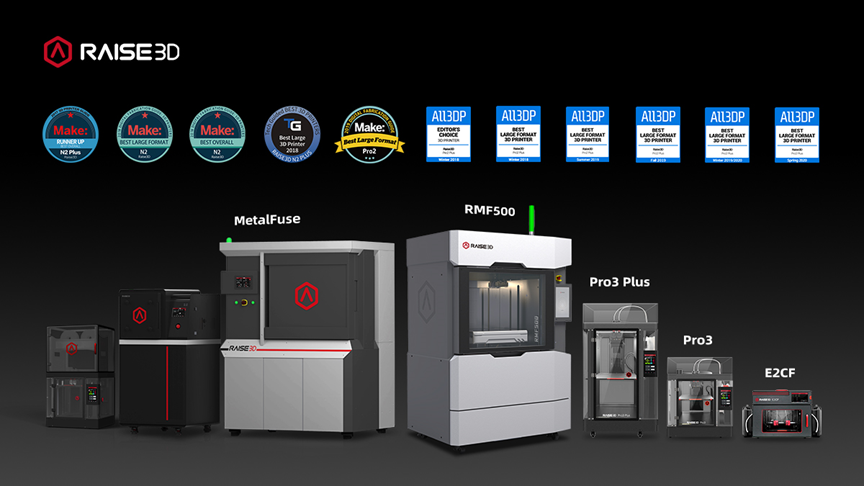
Shanghai Fuzhi Information Technology Co., Ltd. (“Raise3D”)—a global professional 3D printer manufacturer—recently announced the completion of its Series C financing round, raising 100 million RMB. GP Hi-Tech Capital led this round of funding, followed by Chuangyu Investment, with B+ investors C&D Emerging Industry Equity Investment and Blue Lake Capital continuing to follow up its previous investments in Raise3D.
Raise3D is a professional 3D printer equipment manufacturer that provides state-of-the-art 3D printing equipment and solutions to leading global manufacturing companies (including SpaceX, Tesla, Apple, and DJI), helping them to accelerate R&D innovation and product iteration, and to realize flexible manufacturing in the future. Raise3D products are sold in 173 countries and regions and are used by more than 50,000 manufacturers worldwide.
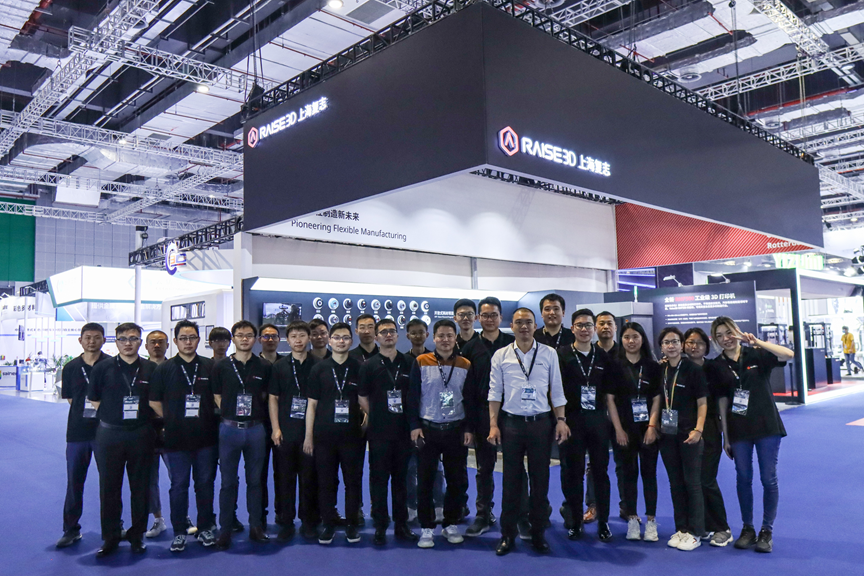
As a fast-growing top-notch tech company, Raise3D has established global teams for collaborative innovation. Headquartered in Shanghai with manufacturing bases in Nantong and Suzhou, the company has proactively engaged in synergistic research and development in China, the United States, and Europe. It has now set up overseas offices and specialized international teams in California and Rotterdam.

After six years of development, Raise3D has established itself as a world-class brand with outstanding product strength and a high market share. In the past year, Raise3D sold almost 10,000 professional 3D printing devices worldwide, further expanding its market share. Statistics show that Raise3D ranked third in the world and first in China in professional 3D printing devices in 2020. Using the funds raised from this financing round, Raise3D will invest in new technologies and engineering applications to expand its product portfolio and its production capacity in Suzhou in addition to construction a new R&D center in Wuhan.
Feng Hua, Founder and CEO of Raise3D said that “as manufacturing companies continue to realize the changes and benefits brought about by digitization and in-house innovation, we have seen enormous opportunities for professional 3D printers which enterprises use for prototyping or small-batch manufacturing.” He continued that “the newly raised funds will enable us to develop a more diversified product portfolio for this market. We will expand our application fields from 3D printing equipment to consumables, especially our production in the high-precision industry. We will continue to invest in the research and development of 3D printing technologies for high-performance materials such as metals, ceramics and fiber-reinforced composites and strive to provide the replicability required for industrial production and empower intelligent industrial manufacturing. We are full of confidence in the new product forms we will develop at the next stage, and our customers are also looking forward to our products.”
Ray Hu, Founder & Managing Partner of Blue Lake Capital, delivered a recent speech titled “The Future of China’s Digital Economy from a Venture Capital Perspective” at the World Innovators Meet (WIM) 2021 Global Real Economy and Technology Summit, hosted by EqualOcean.
This speech has been condensed and edited for clarity.

Dear all, I am Ray Hu, the founder and managing partner of Blue Lake Capital. It is a pleasure to have the opportunity to speak to you today.
Blue Lake Capital is a venture capital firm specializing in the technology sector. Since our founding in 2014, we have made investments targeting digital transformation and digital upgrades. We see two major motivations for digitalization: one is cost reduction and efficiency which can be improved through software for daily operation and management; the other is the constant need for upgrades and iteration in China’s vast manufacturing industry. Accordingly, we focus on investment in intelligent manufacturing and enterprise software, especially cloud-based SaaS software.
2020 proved to be remarkably special. It saw an almost 17% rise in GDP for the software and IT services industry. This high growth rate in a single sector in such a huge economy is partly fueled by the pandemic and partly because China is hitting rapid growth in digitalization.
China’s digital transformation is unique, and it’s only just beginning. There are almost 200 software companies listed in the A-share market, valued at a total of 3 trillion yuan, representing a significant revenue volume, and China is a leader globally in terms of research capabilities in artificial intelligence technology. As a result, digitalization and intelligence in China progress in tandem and largely on the same frequency as the world.
Digitalization has broad applications in China’s manufacturing industry. However, this industry has faced a considerable challenge: it’s big but not strong. To achieve breakthroughs in manufacturing capacity and efficiency, we, as the world’s most significant manufacturing power, should inevitably turn to “digital transformation and upgrades.” The country has high expectations and high requirements for the manufacturing industry, especially in terms of core process innovation, digitalization of production lines, intelligent equipment, and localization of industrial software. This turns out to be a good opportunity for entrepreneurship and investment.
So how big is the market opportunity in this industry? Let’s make a simple analogy. Informatization and digitization have been revolutionizing the consumer market in China since 2000. China’s six largest consumer tech companies add up to a market cap of almost $2.5 trillion US dollars. As the world’s second-largest economy, China is bursting with market opportunities even greater than the consumer market, if enterprise management and manufacturing can be intelligently and digitally transformed.
Among these opportunities, we see application-side enterprise software offerings as “low-hanging fruit” that will mature the fastest in the next 2 to 3 years. Let’s make a simple calculation of the growth of China’s SaaS market in the next few years. Based on a P/S standard growth rate of 20-25x (the average P/S for US SaaS companies is 20x), the value of China’s SaaS market is expected to exceed 6 trillion yuan in 2025. China’s SaaS software entrepreneurship is entering into its golden time:
First, the software market shows strong performance both in terms of supply and demand. China has one of the highest smartphone penetration rates in the world. The public cloud infrastructure here is expanding at an extremely rapid pace. Compared with 2015, AliCloud’s revenue grew 50-fold over five years, while its public cloud offerings saw a dramatic drop in unit price. This is a very representative signal. Similarly, the US SaaS software market also began to boom with the commercialization of AWS in those days. It made an affordable platform available for developers, which contributed to the blossoming of the SaaS market.
Second, we believe that Chinese entrepreneurs stand a perfect chance of making globally leading software products. For one thing, China already leads the world in AI algorithms and capabilities, and today’s enterprise software has undergone the digitization and intelligentization process. For another thing, China leads the world in the mobile internet ecosystem. Thanks to the accumulation of the consumer internet industry in the past two decades, we now enjoy the world’s leading mobile payment and communication software. Many applications can be exposed to end-users through mini-programs and enterprise-level communication tools—DingTalk, WeCom, Feishu, etc.
Third, Although China’s SaaS offerings remain in the early stages of popularization compared to the mature market in the US, we believe that, fueled by the previous two reasons, the penetration of SaaS offerings in China can increase from 13% in 2020 to 25% in 2023.
SaaS offerings are one of the few growing and reliable business models in the B2B market. The past 2 to 3 years have seen increasing attention in the software industry from the primary market. 2021 is a milestone year. Investment in the SaaS industry in the first half of this year was 70% of that in the whole of last year, and VCs are increasing their investment in the software industry.
In the secondary market, the cumulative market cap of the 40 leading cloud-based SaaS companies in the US has grown nearly 6.7 times over the past five years. In comparison, the Nasdaq index has grown 1.8 times, meaning that SaaS software companies outperformed the technology stock market by almost five times. This is similar to the Chinese market. We have fitted the market cap performance of A-share listed SaaS companies to the Blue Lake China SaaS Index. This index also outperformed the A-share index by 4 to 5 times. The capital market shows high investment enthusiasm for SaaS enterprises.

Source: 蓝湖资本 – SaaS (bluelakecap.com)
As a venture capital firm specializing in digital transformation and upgrades, we have invested in nearly 30 companies in the software industry over the past five years, making extensive layouts. More than 10 of them have now reached first place in their respective tracks, each of them at least two to three times bigger than their biggest competitor.
These products focus on scenarios in various functional departments of enterprises, such as sales, human resources, procurement, finance, and legal affairs as well as subsectors like automobile, catering, e-commerce, games, and industry.
The application scenario in the manufacturing industry is particularly worth mentioning. If we split the business chain of the manufacturing industry, there are a lot of digitalization scenarios involved, ranging from supply chain collaboration, procurement, and design of core software components to the production process and the post-production inspection link. Blue Lake has also made investments in each of these segmented scenarios. The inspection link, for example, is perceived as a very traditional artificial link, i.e., engineers send sample products to the laboratory for quality inspection. However, this approach has made it increasingly difficult to meet production requirements. Many manufacturers have raised new requirements for inspection means and methods today, including demanding full inspections. In this regard, efficiently capturing the data collected in the inspection, like optical, vibration, and acoustic signals, and making quick and accurate judgments, has become an urgent issue. Digitalization enters the picture as the best solution.
Digital innovation spans a vast scope and is a world-class market where Chinese entrepreneurs can participate and make an impact. As a venture capital firm concerned with the digital transformation and upgrading of enterprises, we have seen an increasing number of startup teams on the front line make breakthroughs in technology and products. We believe China will bring world-class digitalized products to the global market.
Looking back, what is the core driving force behind China’s miraculous ability to sustain rapid growth over the last four decades from reform and opening until now? From a humanistic perspective, it is the hard-working spirit of the Chinese people. From an industrial perspective, China is now at a special stage of development. China spent 40 years advancing in urbanization, industrialization, and informatization all in parallel, covering a development course of nearly 200 years in Western countries. As the world’s second-largest economy, China still boasts a world-leading GDP growth rate today. As an investment institution, we feel fortunate to be able to do our part in the digital transformation and upgrading of China’s economy together with outstanding entrepreneurs.Thank you.
Blue Lake Capital was awarded the following at the World Innovation Award 2021 (WIA2021)
– 2021 China’s 10 Investment Institutions: Science & Technology
– 2021 China’s 10 Investment Institutions: Smart Manufacturing



HireEZ, the global AI talent recruitment platform formerly known as Hiretual, recently closed a Series B+ funding of $26 million USD led by US-based Conductive Ventures and followed by Blue Lake Capital, a leading Chinese venture capital fund.
HireEZ was founded in Silicon Valley in 2015. As one of the fastest-growing AI technology companies in Silicon Valley, hireEZ is committed to building the world’s largest talent knowledge map and AI recruitment SaaS system. Between its leading technology and products and its incredible 250%+ annual revenue growth, hireEZ was ranked top three in the recruitment automation category by G2 Crowd in 2022.

Traditional recruiting solutions are stretched thin in today’s tight labor market. According to a study submitted in January 2022 by SIA (Staffing Industry Analysts), the US’s top HR consulting firm, more than 71% of companies are facing a talent shortage and plan to increase their recruiting budgets. The high cost of recruiting has led many companies to use SaaS on a large scale to fuel talent acquisition. hireEZ is transforming the existing passive recruitment model with “Outbound Recruiting” which implants AI in each company’s HR system and improve the intelligence of recruitment of automated recruitment. The term “outbound recruiting” is derived from “outbound marketing,” which has been popular since around the turn of the millennium. For hireEZ users, the average time to find the right candidate has been reduced by 50%, while acquiring 5x more suitable candidates.
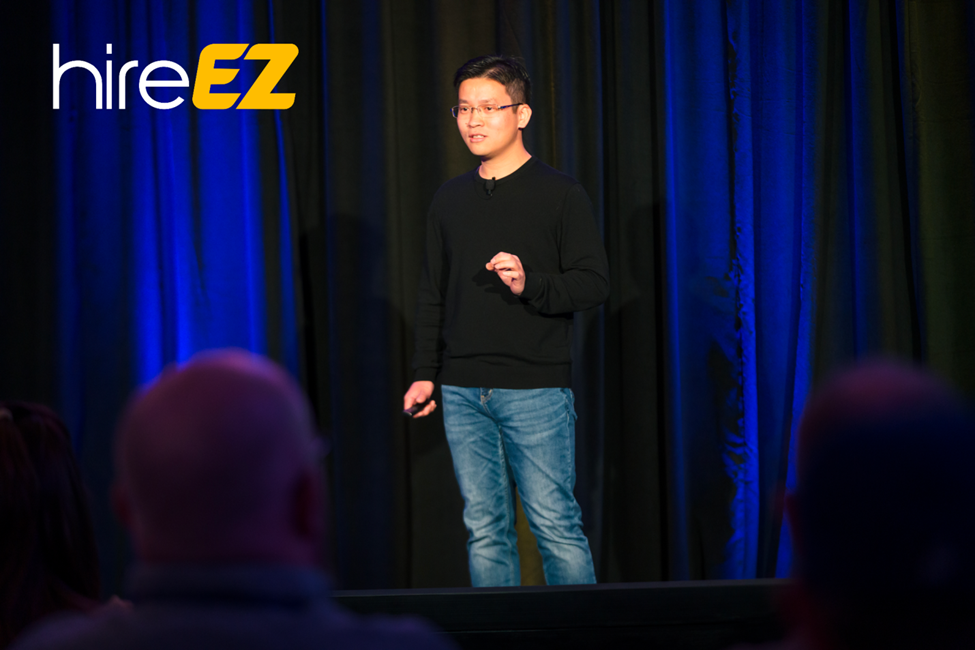
hireEZ’s entrepreneurial journey began with a common pain point that the two founders, Jiang Haiqing (Steven Jiang) and Zhang Xinwen, experienced at Samsung R&D. When Jiang first arrived at Samsung’s newly established R&D department, the biggest challenge was how to recruit the right talent for the job. From seven employees in the beginning to a team of two or three hundred a few years later, recruiting was an issue the two often discussed. Jiang found that the current recruitment process and methods made it difficult to complete the recruitment task with efficiency and high standards. In his opinion, recruitment is a basic problem faced by all industries and all companies. With their confidence in technology and business know-how, they decided to enter the recruitment SaaS industry, thus starting their technology venture.
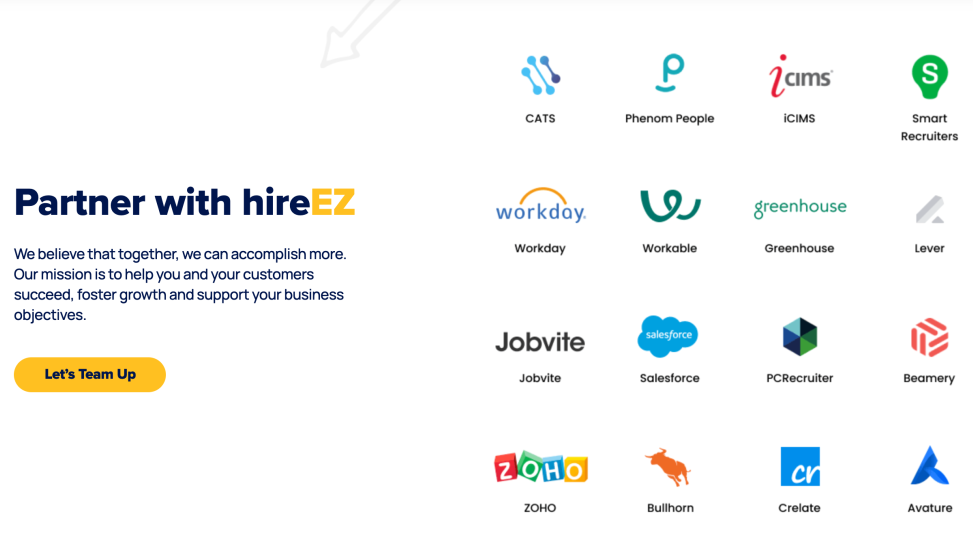
Today, hireEZ is the market-leading intelligent recruiting SaaS system that provides employers with talent market insights. hireEZ builds data-driven recruiting strategies to engage with the right candidates by integrating with nearly 50 leading CRM/ATS platforms and having over 750 million candidate resumes. With hireEZ, employers can execute a proactive, strategic, and scalable recruiting strategy to achieve rapid team expansion.
Thanks to its globalization strategy, hireEZ’s clients among Fortune 500 companies include technology giants such as Cisco, Zoom, Facebook, Amazon, and many other established companies such as Visa, Mastercard, Verizon, and Adobe. hireEZ’s clients come from over 30 countries, with most coming from high net worth markets such as the US and Europe.
As a well-known venture capital firm with extensive investment in SaaS, Blue Lake Capital has been looking for investment opportunities in different segments of intelligent SaaS in the global arena. Based on the success of the “active marketing model,” Blue Lake believes hireEZ to be the ZoomInfo of the recruitment industry, allowing recruiters to proactively reach potential candidates. According to Chen Haohui, the partner at Blue Lake Capital, “hireEZ provides recruiters with a ‘talent resume database.’” In the coming years, as the proactive recruiting approach matures, it will gradually become an indispensable channel for corporate recruiting in the global market, just like the explosive growth of proactive sales a few years before.

With the completion of a new round of funding, the company has upgraded its branding from Hiretual to hireEZ. hireEZ is inspired by the company’s mission: Outbound Recruiting Made Easy (EZ), and is dedicated to truly realizing its revolutionary vision of “Make Jobs Find People.” “In this unprecedented era, recruiting has become an extremely challenging task,” says CEO and co-founder Jiang Haiqing. “Recruiting teams can no longer afford to wait for candidates to submit their resumes; they must take a more proactive approach to recruitment to effectively grow the company’s workforce. That’s why we upgraded our brand from Hiretual to hireEZ to clarify our mission.”
hireEZ is a global and multicultural company that has been committed to empowering global recruitment since day one. Currently, hireEZ has built a global driving engine with collaboration in Beijing, Shanghai, Suzhou, Xiamen, and its Silicon Valley headquarters, with talent from seven countries working together for the success of hireEZ’s global clients. hireEZ employees have worked for some of the most innovative companies in Silicon Valley, and have graduated from Stanford, UC Berkeley, Peking University, China University of Science and Technology, Shanghai Jiaotong University, Zhejiang University, and other top universities.
Jiang Haiqing graduated from the University of Science and Technology of China with a degree in Computer Science, and the CTO Zhang Xinwen graduated from Huazhong University of Science and Technology with a bachelor’s degree in Computer Science and holds a Ph.D. in Computer Science from George Mason University. They have both worked at Samsung R&D. hireEZ has absolute intellectual property rights to AI technology patents and continues to collaborate with top AI labs and publish papers. After this round of financing, hireEZ plans to further invest in product innovation, expand operations, and initiate global recruitment of talented individuals to strengthen its global dominance in the active recruitment space, said Jiang Haiqing.



Haohui Chen, partner at Blue Lake Capital, has recently announced “It is a great pleasure to introduce another important investment by Blue Lake in the cross-border e-commerce sector. The sportswear category is enormous and growing steadily, and the increase in e-commerce penetration will further drive the growth of 3rd-party sellers and DTCs. Xiamen Dream Supply Chain Co., Ltd. (“Xiamen Dream”) is one of the few teams in the cross-border e-commerce field that is grounded in its supply chain integration, highly efficient, and dedicated in its operations. Xiamen Dream is gradually carving out its market share and has great potential to grow to become the best sports brand from China.”
In December 2021, the cross-border sports brand “Xiamen Dream” completed a Series A funding round of 100 million Chinese yuan led by CCIG Cultural Investment Fund (a subsidiary of China Capital Investment Group) and co-invested by Blue Lake Capital. Xiamen Dream owns “BALEAF” in addition to other sportswear brands, and it is a growing force in the international sportswear industry, with the brand becoming increasingly popular among consumers in North America and Europe.
Founded in 2014, Xiamen Dream focuses on sports apparel and peripherals in five categories: yoga, running, outdoor, cycling, and surfing & swimming. Their products are sold in North America, Europe, Japan, and South Korea, relying on brand websites and mainstream e-commerce platforms such as Amazon. Xiamen Dream is a leading company in the industry in terms of its supply chain, user scale, and brand awareness, and has maintained high growth for many years, making it one of the most promising companies in the field of cross-border e-commerce.

The core team at Xiamen Dream comes from numerous renowned Chinese Internet companies, including listed companies and traditional apparel industry giants. The team has rich experience in big data, e-commerce, supply chain, product development, brand upgrading, and more. The company greatly values its talent training and corporate culture, and has set up the Xiamen Dream Research Center to build its talent training system.
Xu Muxuan, the founder of Xiamen Dream, said, “This is a year of opportunity and a year of great challenge for Chinese manufacturers to build their brands globally. Behind a successful brand, there must be a consistent belief: a way to resist short-term temptations and consistently make the right choices. These are the questions we think about most often. We have helped a large number of suppliers grow from small workshops to companies with annual revenues of millions or tens of millions, and these partners have also worked with us to provide consumers with high-quality and cost-effective products. And it is our team, our partners, and our consumers together that have made Xiamen Dream what it is today. This new funding round marks a new starting point for Xiamen Dream. We will continue to invest in information technology, product development, and brand-building to continue to bring excellent and high quality sports products to our customers.”
Going forward, Xiamen Dream will continue to focus on the sports industry by building a brand omnichannel, continuing to expand its market scale and brand awareness, building an internal big data center, and gradually completing its digital transformation. Meanwhile, Blue Lake Capital will continue to help more Chinese brands go abroad through the standardization of the cross-border e-commerce industry.

In January 2022, the WeCom service provider “Tanma SCRM” announced that it has received a 10-million US dollar investment from Welight Capital.
In November 2021, Tanma SCRM received Series B+ funding from Zhong Ding Capital, followed by Series B funding in July, led by SoftBank Ventures Asia and co-invested by Shunwei Capital, and finally Bluelake Capital led the investment in Series A funding in May.
Founded in 2020, Tanma has nearly 500 employees with core team members from well-known enterprises at home and abroad, including Google, Tencent, Baidu, Huawei, Kingdee, IBM and SalesEase. Tanma R&D Center, led by a former Baidu scientist and supported by talents from top universities around the world, focuses on cutting-edge technological innovation based on its rich experience in enterprise services.
As an integrated SaaS platform for marketing, sales, and customer services, Tanma SCRM focuses on both B2C and B2B services enterprises. Its clients come from many sectors including education and training, finance and insurance, medical beauty, home decoration, manufacturing, enterprise services, and more. Consumers in these sectors have a long decision-making cycle, attach great importance product and service experience, and have high brand loyalty. So, they often need professional help from salespersons, consultants, and other experts to establish long-term, profitable relationships.
To address these issues, Tanma launched a social SCRM system with customer and sales management as its core which helps enterprises connect with customers more conveniently than ever. Tanma provides solutions for the whole process of customer acquisition—conversion, transaction, and operation—to reach and convert quality customers. At the same time, through a combination of content and tools, Tanma enhances the professional performance and effectiveness of enterprise employees, strengthens brand trust, and forms a virtuous cycle of word-of-mouth customer acquisition.
To help enterprise customers take full advantage of WeCom to boost business growth, Tanma uses SCRM products to provide operational strategies and SCRM-accelerated implementation support for companies in the private domain businesses. This support can help enterprises to avoid poor operational thinking and low efficiency by allowing them to build on their underlying operational capabilities to achieve cross-cycle, sustainable performance growth.
Some traditional industries do not know how to operate after diverting users to WeCom, resulting in a large number of user losses. Tanma’s training programs help to resolve these issues. As an example, with Tanma’s help, one group enterprise shortened the time of internal WeCom usage training from 30 days to just 7 days, and the activity of their 7,000 employees on WeCom and SCRM increased from 60% to 95%. Further, through tactical adjustment, their rate of WeCom diversion increased from 2% to 20%. Through user research and data analysis, the Tanma team helped this client to sort out the reasons for user losses and reformulate their operation strategy. After a few tests and adjustments, the user retention rate increased to 80%.
Follow us on Wechat