


On 16 December, Forbes China released its List of 2025 China’s Top 100 Venture Capitalists, and Ray Hu, Founder and Managing Partner of Blue Lake Capital, has been ranked on the list.
Benefiting from the overall recovery of the Chinese market, this year has been particularly fruitful for investors in the technology and consumer sectors.
In 2025, Forbes China has conducted an independent survey of venture capitalists active in China market for the 19th consecutive year, and identified 100 investors who have achieved excellent returns in the past five years among a sample of nearly 1,000 recommended by hundreds of venture capital firms.

Following his inclusion in the Forbes China’s “2024 Top 100 Venture Capitalists” list in 2024, Mr. Ray Hu has been selected for the list again this year. This is not only a high affirmation of his outstanding investment acumen and leadership, but also a recognition of Blue Lake Capital’s achievements in cultivating technology venture capital for ten years and always focusing on the forefront of industrial digitalization.
From his early insight into the wave of intelligent manufacturing and enterprise services to his forward-looking strategic positioning in core areas of “new quality productive forces” such as autonomous driving and the new energy vehicle industry chain, Mr. Ray Hu has led Blue Lake Capital to leverage capital to support innovation and provide professional support for growth, continuously promoting the deep integration of technological innovation and industrial upgrading. Looking ahead, Blue Lake Capital will continue to uphold its commitment to in-depth industry cultivation, joining hands with more entrepreneurs to shape a more dynamic and competitive technology future with foresight and resilience.
Source:Forbes China
On December 10th, Forbes China released the ‘Forbes China Venture Capitalists 100 of 2024’ list. Ray Hu, Founder and Managing Partner of Blue Lake Capital, was honoured to be on the list.

Until 2024, Forbes China has conducted independent research on venture capitalists who actively participate in the China mainland market for 18 years consecutively. After that, they identified 100 venture capitalists who had achieved good returns in the past five years among a sample of nearly 1,000, with referrals from hundreds of VC firms.

As a venture capital institution that has been established for ten years, Blue Lake Capital has laid a solid foundation in the field of science and technology venture capital after years of intensive cultivation under the leadership of Ray Hu. In particular, it has made considerable achievements in investments in autonomous driving, new energy vehicle industrial chain, industrial digitalization, etc.
Images source from: Forbes China
On 20 May, Cyzone released its “New Youth Venture Capitalists 2023″ list, in which Haitao Wei, partner of Blue Lake Capital, was honorably named as one of the ” 2023 Cyzone Top 40 Investors under 40 years old” for his in-depth planning and outstanding performance in investing in the intelligent manufacturing field.
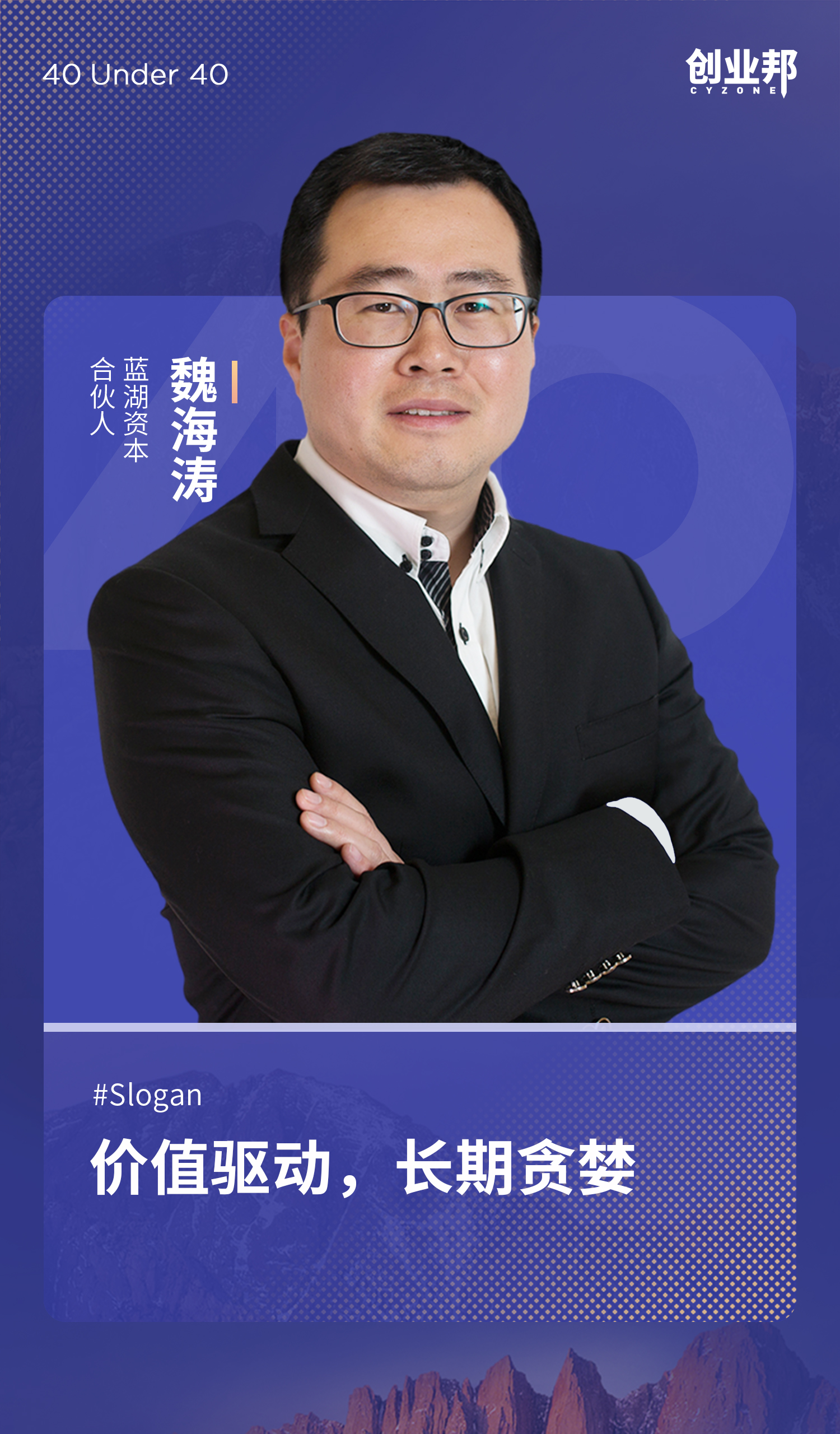
Cyzone has published the “Top 40 Investors under 40 years old” list for 11 consecutive years since 2013, with the aim of finding top capitalists who are active at the forefront of venture capital. Over the past 10 years, a total of 246 outstanding young investors have been named (excluding those who are repeatedly named), who are knowledgeable, diligent and insightful, capturing opportunities in their own investment fields and are pillars of strength in the venture capital field.
Mr. Haitao Wei is a partner of Blue Lake Capital. He holds a Bachelor’s Degree in Electronic Engineering from Shanghai Jiao Tong University and a Master’s Degree in Business Administration from Antai College of Economics and Management, Shanghai Jiao Tong University. Having over 10 years of experience in the venture capital industry, he has been practicing the investment philosophies of “industry and research driven”, “deeply explore the market” and “finding and continuously creating value”, and has long been focusing on the investments in the fields of intelligent manufacturing and corporate software.
During his time at Blue Lake Capital, Mr. Haitao Wei, with his forward-looking perspective and deep understanding of the industry, extensive and close entrepreneurial connections, excellent negotiation and execution skills, as well as his determination to work alongside entrepreneurs, has led his team to identify numerous high-quality projects and achieved lucrative exit returns. Representative examples include Chaozhuo Aviation Technology (688237), Zelos, P&R Measurement, Zhenyun Technology, Cloud Helios, Yiheda (301029), Raise3D and more.
The ” 2023 Cyzone Top 40 Investors under 40 years old” were selected through a two-month call for applications and interview surveys, which was based on a comprehensive assessment of four dimensions: investment experience, investment performance, exit performance and industry influence.

The 2022 CVAwards was announced on 19 May 2023, in which Blue Lake Capital was named as one of the “Top 50 Best Foreign Venture Capital Firms in China 2022”, for its outstanding performance in the full process of capital raising, investment, management and exit in 2022.
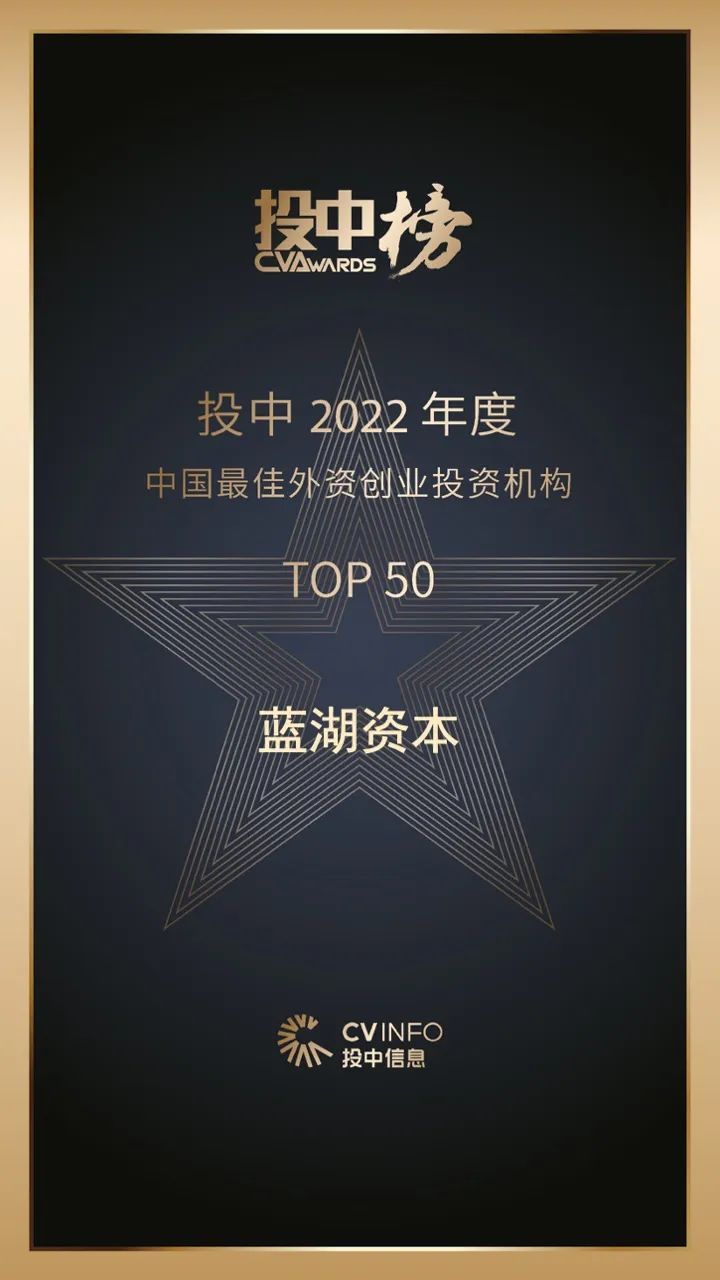
CVInfo has published the “CVAwards”, a series of lists of Chinese venture capital firms and private equity investments, as an independent third party organization for 17 consecutive years. Based on data from CVSource standardized by the China Venture Capital Research Institute, recipients of the Awards were selected from more than 1,000 active investment institutions in the private equity sector according to the rankings of overall points. Divided into several categories by strict criteria, the event is known for its professionalism, authority and rigour. It is therefore also known as the wind vane of the domestic equity investment industry and is currently an important funding basis for many large institutional LPs.
The Awards announced included the “Best Foreign Venture Capital Firms in China 2022”, “Best Venture Capital Firms 2022”, “Best Private Equity Firms 2022”, “Best Early Stage Venture Capital Firm 2022”, “Best Limited Partners 2022” and “Best Sectoral Investment Firms 2022”.
Since its inception in 2014, Blue Lake Capital has been focusing on China’s digital transformation and upgrading from a multifaceted perspective of “research + industry”. It has captured industry changes as well as identified and assisted insightful entrepreneurs in the fields of intelligent manufacturing and corporate software, promoting the industry development as an investor, entrepreneur and operator. To date, Blue Lake Capital has been named as one of the “TOP 50 Best Foreign Venture Capital Firms in China” of CVAwards for a total of eight times.
The 4th China LP Conference & the 3rd Lujiang Venture Capital Forum hosted by FOFWEEKLY and Local Financial Regulatory Bureau of Xiamen City was held on September 8th in Xiamen. Blue Lake Capital is honored to receive the award of “TOP20 Investment Firm in Soft Power – GP Market Impact” which was unveiled at the forum. Blue Lake Capital was awarded for its deep accumulation in industry perspectives, investment decisions and post-investment empowerment.
It is the second time Blue Lake was recognized by a professional third party within one week after it had been awarded the title of “2022 TOP100 Most Admitted Venture Capital Firms” by Cyzone at the 2022 DEMO CHINA Innovation China Summit on September 7.
Since its establishment in 2017, FOFWEEKLY has been committed to becoming a professional platform for GPs and LPs. It aims to help institutional investors improve efficiency and assist distinguished investment firms with worldwide expansion by leveraging its advantage of being a local platform, its independent and professional philosophy, insightful content, targeted community, and professional services.
In 2022, FOFWEEKLY has profoundly explored how soft power theories impact the GP development in practice once again. It introduces and breaks down soft power into multiple dimensions, such as “value creation, service empowerment, organization & governance, market impact, innovation drive and social responsibility”. It describes and deconstructs the internal momentum contributing to GPs’ long-term development and outstanding performance. Based on quantitative and qualitative evaluation that is open, fair, and just, FOFWEEKLY “re-judged” and “re-evaluated” leading firms in the industry before revealing the “Investment Firm Soft Power Ranking List”.
Blue Lake Capital, a venture capital fund jointly driven by industry research and industry experience, focuses on investing in start-ups in the fields of SaaS and intelligent manufacturing. It deeply empowers entrepreneurs at all stages of business development by providing strategic consultation, introducing core resources, recommending key talents, and advising on financing.
Blue Lake looks forward to cooperating with preeminent entrepreneurs as an investor, entrepreneur, and operator from a unique “research + industry” perspective, while pressing ahead with the innovation and upgrading of China’s digital industry regardless of challenges.
At the 2022 DEMO CHINA held on September 7, Cyzone, a renowned new commercial media as the host of the event, revealed the list of “2022 TOP 100 Venture Capital Firms”. Blue Lake Capital was on the list for its forward-looking and distinctive entrepreneurial perspectives in the fields of intelligent manufacturing and SaaS, its precise and disciplined investment decision-making process, as well as its ecosystem of collaboration and co-prosperity across portfolio companies.
As a media platform conducive to the vertical development of the innovation economy, Cyzone has long focused on investment firms’ reputation. It is dedicated to discovering venture capital firms that are the most respected and admitted with the most “soft power” in the industry, aiming to encourage the industry to think about and pay attention to “the long-term investment value”.
The preliminary screening of the Top 100 list was based on data submitted by candidates and the data from Bestla, a data analysis platform under Cyzone. The shortlists were then voted on by nearly 300 veterans from outstanding VC firms. They selected the most admitted VC firms in terms of the following aspects, such as investment performance, post-investment services, industry position, innovation capability, long-term value, talent attraction capability, ESG practice, and so on. The list of “TOP 100 Venture Capital Firms in China” was finalized with the results of votes being taken into account.
Founded in 2014, Blue Lake Capital is a venture capital fund jointly driven by industry research and industry experience. It invests heavily in the innovation and upgrading of China’s digital industry by focusing on investing in start-ups in the fields of SaaS and intelligent manufacturing.
Since its establishment, more than 20 of Blue Lake’s over 100 portfolios have become unicorns/the best performer in their respective industries, including Yiheda (301029.SZ), Chaozhuo Aviation Technology (688237.SH), Momenta, JST, Moka, Zhenyun Technology, HELIOS and other renowned enterprises. Enterprises invested by Blue Lake Capital secured follow-on financing of over RMB 20 billion.
Blue Lake is committed to enhancing its soft power. It focuses on the innovation process in the noble cause of China’s digitalization and industrialization by providing the most foresighted support for valuable innovative technologies and talents, developing an ecosystem of engagement and collaboration across portfolio companies.
Since its inception in 2014, Blue Lake Capital has been in TOP lists for multiple times revealed by authoritative media as a top investment firm in different categories. Looking forward, Blue Lake Capital will consistently focus on long-term value and soft power with dedication across the whole industry chains of intelligent manufacturing and SaaS. We look forward to partnering with outstanding entrepreneurs to contribute to the innovation and upgrading of China’s digital industry!
On June 6, Blue Lake Capital received the certificate of the “TOP 20 Investment Firms in Enterprise Services that are Most Focused by LPs in 2021.” made by FOFWEEKLY on the first day of returning to office work after the Shanghai lockdown.
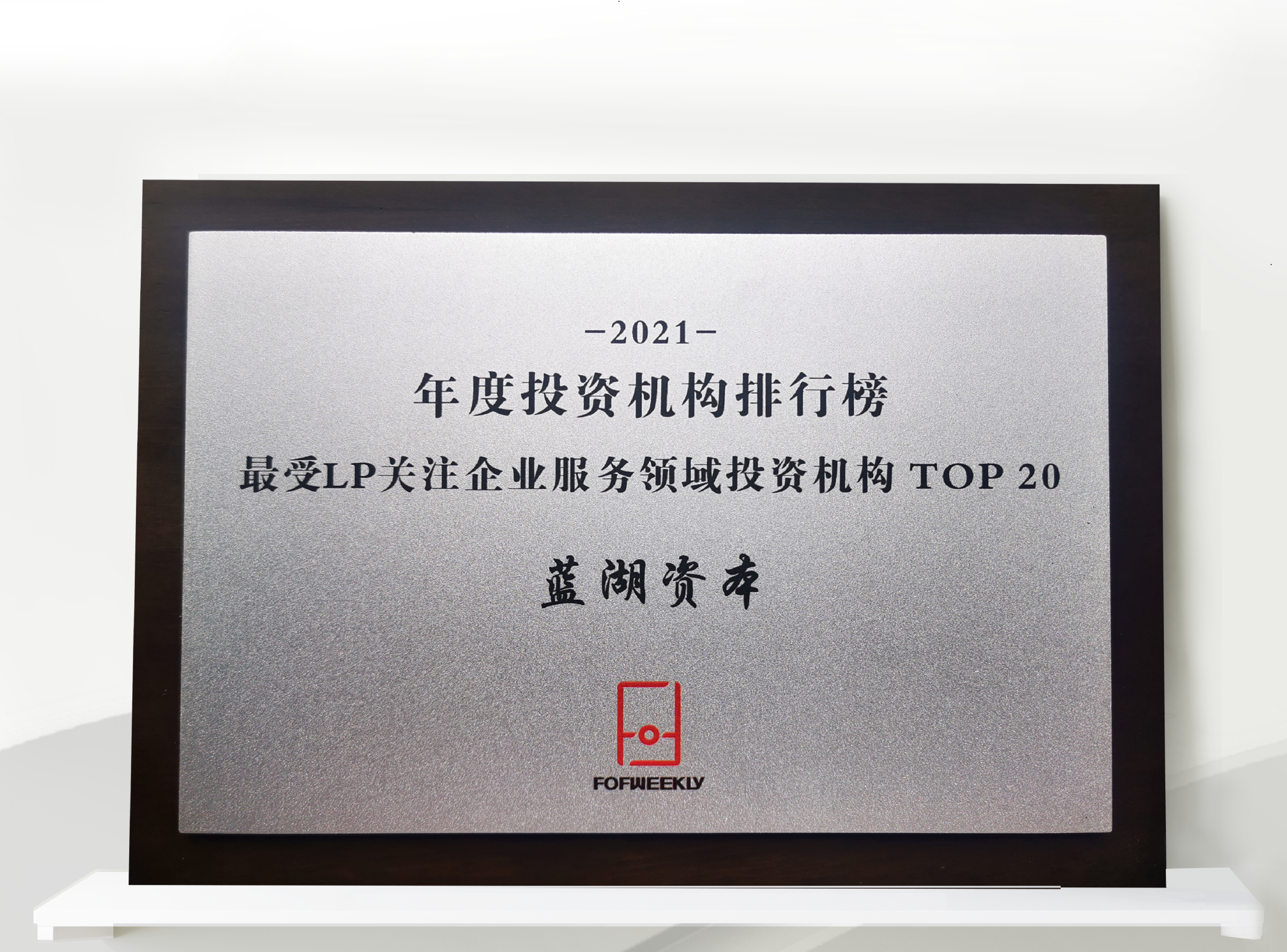
After exploring the ways of building a core driving force for the GPs that are surviving and thriving in the new cycle of global economic development environment and local market development stage, FOFWEEKLY has put forward a relevant evaluation system and found many active firms including LP and LP-recognized GP.
Based on the above principles, FOFWEEKLY compiled a FOFWEEKLY “2021 Annual Investment Firm Ranking List” through its research on China’s equity investment industry. This listfocuses on leading firms with the most sustainable development in the new ecological environment. Important indicators include length and prosperity of Firm, continuous return on investment, and social responsibility. In addition, it publicly recognizes the leading investment Firms that play an exemplary role in advancing social development.
As a new generation of research-driven venture capital funds, Blue Lake Capital has been closely following tech innovators in China’s digital transformation. Upgrades and enterprise services have been the key areas that Blue Lake Capital has focused on. With years of extensive and in-depth communication and engagement with entrepreneurs, the Blue Lake team has accumulated a broad base of know-how in the field of enterprise services. A multi-dimensional analysis mechanism has been established from products, implementation, sales, competitors, and cash flow, as well as administering a post-investment service system with unique Blue Lake characteristics. This was accomplished by creating a Blue Lake enterprise service ecosystem and integrating post-investment resources. In recent years, Blue Lake has invested in many industry-leading projects including JST, Zaihui, HELIOS, Momenta, and Moka.
Moving forward, Blue Lake Capital will continue to seek investment opportunities in the field of enterprise services and cooperate with outstanding entrepreneurs to create value for Chinese enterprises.

What are the hottest arenas for VC firms this year? Most investors would agree—it’s new consumption and enterprise service.
However, enterprise service is not nearly as accessible as internet products are for most people. You don’t often hear sexy, insane growth stories. However, as the internet traffic dividend dwindles to a trickle, business warfare starts to break out from behind the scenes — among companies that are quietly serving their big-name corporate clients.
In the enterprise service sector, SaaS attracts the largest amount of capital and is considered the most likely to disrupt the software market. It is estimated that China has about 20 SaaS companies with over 100 million RMB of ARR (annual recurring revenue, a key indicator that measures the size of a SaaS company). Blue Lake Capital is a champion of SaaS and has placed a substantial bet on the arena. According to the company, they have invested in 6 of the 20 biggest SaaS companies of the past 4 years.
In July 2021, I had the chance to meet up with Managing Partner Ray Hu, Chen Haohui and Wei Haitao, partners of Blue Lake, and hear what they had to say about SaaS. Blue Lake Capital was founded by Ray Hu in 2014. He is an investor of Momenta, Meicai, Qunar, and Grab. Starting from 2016, Blue Lake Capital gradually shifted its focus area to SaaS, with investment in Moka, Zhenyun Technology, JST(Jushuitan), among other SaaS companies. The insights into the SaaS business they gained over the past five years are more than hard-earned experience than investment methodologies.
Blue Lake Capital was founded at a time when the big VC firms got even bigger in China. That made it impossible to stay a competitive and comprehensive boutique fund. Placing big bets on highly selected companies and becoming part of a value chain has become a way forward for some small and medium-size funds.
Ray Hu characterized this domain-specific strategy as “standing on the other side of the table”.
01 “There’s a devil in every irregularity”
Tencent News: When did the idea of “standing on the other side of the table” come to you?
Ray Hu: When I made my worst misjudgment with Moka. The founder said in angel round that he wanted to do ATS (applicant tracking software). I told him: stay away from ATS. I’m telling you, I’ve looked into it and there’s simply no market for it in China. We talked again in Series A round, and I still decided it was a no-go for me because however, I looked at it, the ATS market was just not big enough to make sense. But then in Series B+, we just couldn’t let the Moka slip away again, so we jumped on the bandwagon.
Tencent News: What did you learn from this case?
Ray Hu: Don’t give too much thought about the ceiling. Knowing the unit price and scale of the customer base should suffice. If both are five-digit, we would take the plunge; if one is five-digit and another is 6-digit, chances are it’s quite a good project.
Basically, it’s about zooming in on matters most in any given stage: in Series A round, see whether the product is standardized; in Series B round, see whether the sales are scalable.
Tencent News: What methodologies have you accumulated for investing in Series A and B rounds of SaaS companies?
Ray Hu: What exactly is an investor looking for in a deal? One, real product with value. Two, margin of safety. Three, compound interest. In the SaaS business, these three things can be translated as: Is there customer value? It is complicated enough, with barriers to entry? Retention/renewal rate?
What’s really good about this arena is there are many success stories, especially in the US. You can look at the growth trajectories of these companies from year one to year ten. By year ten, a company would typically be listed already. The revenue they generate each year, the number of customers they have and the amount of money they burn – all these numbers are readily available. Our job is to identify metrics that are quantifiable so we don’t spend much time on those when doing due diligence, but instead focus on the outliers. Evaluating a deal is about sniffing out irregularities.
Tencent News: What do you mean by irregularities?
Ray Hu: For example, three salespeople generating 20 million RMB of sales.
Tencent News: Isn’t that great?
Ray Hu: It might be. It could also be a red flag for many of the problems you didn’t see. As the Chinese saying goes: there’s a devil in every irregularity.
What could the devil be? No competitors, robust customer demand, short sales conversion cycles, contract signed after one or two visits – all these are irregularities.
Tencent News: Isn’t that supposed to be great? What can be the problem?
Ray Hu: 3 salespeople for 20 million RMB. That’s 6+million RMB per person. That means these are big contracts. Chances are this company is not working on SaaS products but contract deliverables.
Tencent News: Such companies may have a hard time scaling up in the future.
Ray Hu: And the sales pipeline can be problematic. 3 big contracts worth of 20 million. Where can you get 3 more next year? You simply have no idea. I’d rather the 20 million come from 100 small contracts, and next year I can look at signing up 150 to 200 small customers and growing at a steady pace. That’s the certainty I’m looking for.
Tencent News: Any other irregularities?
Ray Hu: Along the lines of sales, say, if a company tells you the cost of sales is only 15%. That just can’t be for a startup in its first few years. We need to dig up as many reasons as possible when doing due diligence because the window is small.
Tencent News: How do we identify irregularities?
Ray Hu: You would have to go the opposite direction by knowing what’s normal or regular. If we have a feel for the business, we would know what’s normal and not get obsessed with it; we would also know what issues are problematic, but not too important. You have to take the bull by the horns and figure it out.
Tencent News: President of Zhenyun Technology Yao Yiming said that if a SaaS company (in China at least) has a high enough ARR rate and retention rate, you can invest with your eyes shut.
Ray Hu: Yes, you can invest blindfolded if those metrics look great. But most companies are not that good, especially in the early stage. They are not around long enough to have a track record, much less a renewal rate.
Tencent News: Two of the four partners of Blue Lake Capital are pure investors, and two are operator-investors. Do you pay attention to different things?
Ray Hu: A pure investor would usually look at the product interface and talk to a few customers, which might be a setup or a bait. You may go one step further and talk to experts and competitors. But even if you find inconsistencies you might not be able to interpret it. An operator investor, however, would hit the nail on the head.
The pure investor would have to know what your hammer looks like and try to find the right nails. Back in the day, there were many opportunities but not nearly enough money. If you showed up in the market with enough money and tried your luck here and there, you could always nail something. Now with fewer opportunities around, if you go hunt for nails with your hammer in your hand, you’re more likely to hit the nail on the head.
Tencent News: What is your hammer?
Ray Hu: That would be our knowledge of how SaaS software should be done.
A SaaS company is supported by three pillars – products, sales, and service. The last two are just as important.
02 “The first 12 months post fundraising are the most dangerous.”
Tencent News: What are the implications of SaaS companies’ rising popularity over the past two years?
Ray Hu: It’s a mixed picture. The good news is it’s easier to raise capital for your portfolio. The bad news is the post fundraising 12 months is the most dangerous period for any company as it tends to make lots of mistakes.
Second, there is a lot more competition – VC firms that used to steer clear of SaaS are coming in; Before you had a deal for 30 million dollars, but now you don’t even get a chance to talk to the founder without putting 50 million on the table; In the past, you had 3 weeks for due diligence, but now you have to whip out a term sheet in three days. The “involution” (cutthroat competition) is incredible. But this is expected – just a matter of sooner or later. You should be worried if you don’t see competition in the industry you want to invest in.
Tencent News: Why is that 12 months the most dangerous? Is it because of euphoria?
Ray Hu: You do get a boost but end up making more mistakes when it comes down to business.
Let’s see what could possibly happen. During the fundraising process, the founder tends to paint a nicer picture and tells investors that the company can bring in at least 30 million next year while it’s more like 20 million. Now, they have to make it happen, say, by having 50 salespeople after fundraising instead of working with just 15. That’s how SaaS companies dig themselves into a hole.
What happens then, with the 50 salespeople out there hunting for new orders? A salesperson may come to his boss and say, this product is usually sold for 200,000RMB, but this big client/sucker/friend I know would sign an 800,000RMB order. But he has a handful of other requests. Yes or no?
Tencent News: No.
Ray Hu: You wouldn’t say no. If you do, the order is gone, so is the salesperson. The order may go straight to your competitor.
You’d just have to sign it. And you’d soon realize that the salesperson has made a way bigger promise to the customer than he was telling you. You’d realize you can’t deliver, and you would have to get more R&D people on board to deliver. Say you have five orders like that and the entire R&D team is burying itself in work trying to deliver, the company would be ground to a halt. Scheduled upgrades are left behind.
Tencent News: What would be the right way to go?
Ray Hu: Do not rush to hire more salespeople.
You need to sign more orders but don’t rush to hire more salespeople. They are shortsighted. The right way to approach it is to follow the original trajectory and do not set a growth target too high. There’s a pattern in this business. A typical SaaS company can grow 50%-100% each year in the early years, but something is wrong if it suddenly hits 200%.
There’s no such thing as a free lunch. A company can grow crazy fast, but not without a hefty price.
03 “Do not put human nature to test.”
Tencent News: Moka CEO Li Guoxing said that organizational capability is more important to a SaaS company than having a heroic CEO.
Ray Hu: The SaaS business is one long value chain that requires the concerted effort of everyone. It is an arena without secrets. The trick is to be able to gather a group of people to do it out of pure faith while being paid a lowball salary.
Tencent News: From your vantage point, what are the typical traps for SaaS startups?
Ray Hu: Sales and delivery are always the two biggest traps out there.
You will not only need good salespeople to drive sales, but you also need willing customers. The salesperson may peddle really hard and rattle off a list of product features. But even if some of the features are unique, 1) it’s not a done deal because that feature might not be what the customer wants, and 2) even if it is, a competitor can catch up within 2 or 3 months.
Tencent News: What should you do then?
Ray Hu: There are many ways around it. For example, developing a new feature. It can be one that customers really need and see great value, or it can be one that looks fancy for driving sales, but that’s not necessarily useful for customers. We need to have both and use them alternately. Every responsible investor would keep revisiting these issues with the founder until they get it right.
Tencent News: What are the fail-safe tips you have?
Ray Hu: The founder of a company we invested used to be in the tech business. One of our partners with operational background asked him about the company’s revenue breakdown by region. He said 50% came from Northeast, 30% from Southeast and 20% from the East. Most investors would just let it lie, but our partner immediately knew the numbers were off – all management software companies get 50% of their sales from the East.
If you build a new sales team in the East region, but the salespeople keep picking the low-hanging fruits. Would you let them? You want to go beyond the tech industry, but how do you tackle the barriers down the road – brand new use cases you don’t have experience with? Greater investment into R&D? Longer conversion cycle for your salespeople? Lower ARPA in other sectors compared to the deep-pocket tech industry? Would you be willing to solve more complicated issues for less? It’d be even more agonizing for the salespeople. If I were the sales lead, I’d think – would this impact my performance and commission? Who should I send to fight the toughest battles? What’s in it for him? All these are typical managerial issues.
There’s a simple solution for this. Let’s say this company is trying to boost its sales in the East. Step 1, send your main sales force to the East to seize the tech industry. If you don’t get it in the bag, your competitors will.
Step 2, cast your net wider to cover more sectors, but not with the entire sales force. Send scouts instead. These are people that will take one for the team. But don’t send your top salespeople. You don’t want to lose them in the fight and impact the team. Send people with mediocre performance.
But then the scouts can’t explore at random, going for the medical industry today and FMCG tomorrow. For example, a salesperson in Guangzhou is assigned to cover FMCG companies. Beyond that the supervisor would have to grant him the approval and go with him. His commission can a bit higher just so his real income does not suffer. If he manages to sign on new customers, he may actually make as much as when he covers tech firms. That’s how a company gets people on board. Take it slow, see whether a certain sector generate more revenue than cost incurred. If the cost is greater, then move on to the next. That’s how you get a hang of the sales dynamic in each sector, at a small cost.
There are many detail issues it’s quite fun. Just tackle them one at a time.
Tencent News: How about delivery?
Ray Hu: A typical delivery issue is – should I say yes to customers’ weird demands? If so, for how much? How much is too low and not doable? Do I do it on my own or hire more people for it?
You may say yes because this feature may be useful to future customers. Then you’d need to involve R&D personnel in customization. Should these people follow the lead of the delivery team or R&D team?
Tencent News: The delivery team.
Ray Hu: Wrong. They should follow the R&D team. After all this customized product will be integrated to the product mix. There are many similar issues like this where choices would have to be made.
Tencent News: Of all customers with weird demands, what type of customer can I say yes to?
Ray Hu: It’s complicated. You’re asking because it’s a judgment call. That’s usually because you don’t have enough customers to tell whether it is a universal demand. Companies would say yes in most occasions because they want to get the order.
Firstly, You need to figure out how to lower the cost as much as can. Second, whether the customization team follows the R&D or delivery team. This is crucial.
Tencent News: Having homogeneous products would only set a company up for an endless price war. So how does one build a differentiated product?
Ray Hu: Moka is highly responsive to customer demands. It has a Net Promoter Score of 8 while the industry average is -20. How did Moka pull that off?
Moka runs a “group for grumbling users”. Everyone from CEO to frontline salespeople and customer service are there. Anyone who receives customer complaints shares a screenshot of the complaint for follow-ups and troubleshooting. If it’s a common issue, it will be put on the agenda for the next meeting, and addressed with a timetable and a lead person.
I don’t think other companies have a group chat like this.
Tencent News: Wouldn’t that make the CEO overwhelmed?
Ray Hu: All discussions would happen among a much smaller group of people. Say, if a salesperson shares a product complaint in the executive group chat, the product manager would go: why did you blast it to the group? You could’ve just sent it to me. Companies with that kind of corporate culture can’t possibly be product-driven. Every company can make the change their customers wish to see, but most would take longer.
Tencent News: They are trying to keep the CEO in the dark.
Ray Hu: We all try to look good and capable. Such is human nature. So don’t put human nature to test.
Tencent News: With all this insight into the business and what’s going on in their minds, how does that help with your investment decision?
Ray Hu: Operator investors tend to subscribe to the Eastern philosophy, which is more about human nature, while pure investors lean toward Western philosophy, which is more logical and categorical.
Investing is an art, not something that can be solved with just equations and numbers.
04 “Herd Behavior in Venture Capital”
Tencent News: Where does the SaaS market stands in terms of development stages? What is the macro-environment that sets the stage for SaaS explosive growth over the past 2 years?
Ray Hu: It is in the early stage of explosive growth. My understanding of the macro environment is different from that of operators. As a pure investor, I would say it happens against the backdrop of raising labor cost, widespread availability of IT equipment and mobile devices, and the readiness of cloud infrastructure. Operators would attribute the rapid growth to VC’s involvement. After all, building a software product can cost 300 ~ 500 million RMB. Apart from VCs, who else has the wherewithal to do it?
Tencent News: So why did VCs enter the fray?
Ray Hu: there is the herd mentality among VCs. They wouldn’t have joined the race without these few success stories.
Tencent News: Why can’t we see a salesforce of China? How do you look at future trends?
Ray Hu: We will, in the next 3-5 years.
Most SaaS companies in the US follow the same playbook. Value creation typically happens after IPO, and the market cap would at least double after IPO.
A growing market cap correlates with stronger performance, higher valuation, and M&A, which is an important factor. Being the first public company in a sector means it has money to acquire latecomers. Salesforce, Adobe and Workday all expanded via acquisition funded by the capital market. The salesforce is key to a SaaS company. That’s how you generate additional sales. SAP and Oracles have been known for their shopping sprees. In China, SaaS companies have not yet taken advantage of the capital market, but they will, sooner or later.
Tencent News: When do you think SaaS companies in China will be ready for the capital market?
Ray Hu: Within 2-3 years. A company can scale up very quickly if it has a solid main business and a smart acquisition approach.
Most B2B companies will live, but they may find it difficult to scale up. If a company grows to become huge, the capital market will give it a high premium. Why? Because we all know that it’s a highly unlikely event. We pay more for scarcity.
In China, I think 10 billion is just a starting point. It’s possible for a company to grow to a 30-50 billion enterprise.
Tencent News: What is the worse fear of a B2B company?
Ray Hu: B2B companies can’t grow fast, which is a good thing, because your competitors can’t either. So if you’re lagging behind, you can catch up real quick. You can afford to make mistakes.
Top B2B companies are investors’ darlings. They have money to burn. The flip side is the cash flow can easily go in the wrong direction. That’s why managing cash flow properly is important. It’s not unusual for a company to stay in the red for the first 3-5 years. But you’ll need enough money to keep up with the bleeding.
Tencent News: Tech giants such as Alibaba, Tencent, Baidu, Tictok have all burst onto the B2B scene. How does that impact startups?
Ray Hu: No impact at all. Granted, they have more traffic, but that has nothing to do with you. Second, even a tech giant will have to stay in the game for years to see any result. The best and brightest always go where they can deliver the best performance. Third, customers don’t always opt for big brands.
Tencent News: With so many SaaS companies in your portfolio, have you created a profile for successful SaaS founders?
Ray Hu: CEOs always care more about customer satisfaction than anything else. This is a business built on repeated purchases, which is an enabler of long-term profitability and a positive growth cycle. A kick-ass SaaS company keeps their customers happy, and the rest of the problems take care of themselves.
Tencent News: I don’t think you’re betting on the founder. As one of your partners Wei Haitao said, “you can’t bet on the founder based on your own preferences.”
Ray Hu: No, we definitely bet on the founder. Regardless of how much we know about a business, 70% of its success depends on the founder. But there are uncertainties. Will a kid make it to an Ivy League school? You never know.
“Not based on one’s preferences” means acknowledging what the founder manages to achieve in a given industry environment. Try putting the entrepreneur and the deeds in perspective instead of being way too biased.
Tencent News: Any profile that you think is no good?
Ray Hu: Those that dither won’t make the cut. A good founder has just the right amount of salesmanship. Smooth talk is important, but he can’t get carried away. He should be aware that he is smooth talking, in a way that the investor picks up without calling him bluff.
Tencent News: As a fund with a focus on SaaS, how do you feel if you fail to invest in the top players?
Ray Hu: How I feel doesn’t matter. It’d be a failure.
Tencent News: How do you just keep winning, and make sure that you always get to invest in top SaaS companies?
Ray Hu: first of all, we have a bit more common sense and a feel about the business than most people. Second, we continue to create value for entrepreneurs, for example, by offering sales enablement module, etc. Blue Lake is like an SaaS for our founders.
We can’t be sure, of course. We can only work harder each day. As we say in Blue Lake, keep showing up at your customers’ doors – that’s how you get business. And we also say that there are only two seasons in a year – a busy season if you work hard, and a slow season if you don’t.
Grab a drink, keep these words in mind, and keep at it. Go home, get some sleep, and go to work again the next day. (chuckle)
05 “VCs are for lazy folks. At least they can get home for dinner.”
Tencent News: You had worked in BCG for 4 years, and GGV for 7 years. Why did you decide to quit and become an investor?
Ray Hu: A consulting project lasts for about 8-10 weeks. 3-4 weeks down the road you know what you are about to write. The rest of the time is spent on writing it up, double checking the format, footnotes, numbers and punctuation, tweaking the wording to get rid of the edge, and fiddling with the color palette. If you look to spend 20 years in consulting, 15 of those years will be all about tweaking formats and wording. That’s kind of boring.
So I was thinking, can I do it the other way around? As a consultant, I put together slides to share my insights with clients. I charged them on a per person per day basis. I couldn’t make more than my hourly rate, which can’t get beyond a certain range. Investing, however, is about using a financial leverage to magnify the return on my insights.
Tencent News: What was your focus area for investment in GGV?
Ray Hu: GGV didn’t assign specific sectors. There were 10 of us and we invested mostly in internet companies and enterprise service companies. We didn’t invest in gaming, though.
I was new to investing. I couldn’t read the three financial statements, and I didn’t know how internet traffic worked. GGV was nice for a rookie like me. I didn’t know anyone there when I joined, and I didn’t make any meaningful contribution in the first 18 months but I didn’t have to stress over it. Those days are gone. Now you can’t possibly show up at GGV clueless about investing. There are more than enough smart and capable people in this business.
Tencent News: Among the companies you invested in GGV, Qunar, 21Vianet and Grab, which is the most interesting?
Ray Hu: Every deal has interesting stories to tell. Qunar opened a door for me. When I heard Zhuang Chenchao’s thinking behind the founding of Qunar, I got inspiration about how to spot investment opportunities in an ocean of companies. He co-founded Shawei.com, a sports website after graduating from college. I asked him why. He said Sina was the hottest portal in 2000 it was impossible to beat. So he picked the hottest channel.
He thought about doing news, and if he did, whatever he created would probably be as big as Toutiao (news site Jinri Toutiao). But he decided that doing news was risky and entertainment news was no fun. Sports is not bad and sports advertisers were rich. So he decided to do a sports portal.
Before he founded Qunar, Baidu and Google were the hottest companies, and finance contributed the lion’s share of revenue for Google. So he founded rong360, a financial search platform. The second biggest advertisers were travel agencies so he switched to OTA and founded Qunar.
Tencent News: Why did you leave GGV in 2014 and founded Blue Lake Capital?
Ray Hu: I was tired of working for others. I could run a financial model and calculate how much I would make in the next 10-15 years. It was a depressing exercise. Not that the numbers weren’t great, just predictable.
Tencent News: Have you seen a seismic shift in the VC industry since 2014?
Ray Hu: The total amount of capital it the hands of top VCs is 2 orders of magnitude (100 times) larger than that of the second-tier VCs. Sequoia, Hillhouse and Tencent each have a pocket so deep it’s bottomless. This was unimaginable back then.
Tencent News: How did you manage to slowly switch Blue Lake’s investment focus to the SaaS vertical?
Ray Hu: In 2016, we saw a shift in the macro environment and sectoral landscape. Money was increasingly concentrating in the hands of top VCs. So they grew bigger in size. When capital is no longer scarce, brand recognition becomes more important. That rules out the possibility of staying as a competitive and comprehensive boutique fund. If you run a small fund and you want to be competitive, you must specialize.
Tencent News: Why didn’t you run a big fund?
Ray Hu: Even big funds start small.
The VC cultures in China and the US are different. Many LPs told me that LPs in the US would usually ask a GP: what is your specialty? And your ROI? But the first question for a Chinese GP is: how big is your fund?
Tencent News: How do small and medium funds like yours survive in an increasingly concentrating VC market?
Ray Hu: We live by diving deeper into a vertical to achieve a network effect. I heard investors quote a famous Chinese saying “the water may be boundless, but I’d take the one ladle I need”. I thought they meant to caution against investing in too many companies. Later I realized it wasn’t a matter of quantity. As long as you’re investing in companies of the same type, same vertical, or of similar nature, you’ve got it all under control.
Tencent News: Large VCs and PEs are putting heavier bets on B2B businesses. How do you get ahead and get deals? Your parnter Chen Haohui said, there was a time where he spent 6 months trying to get a deal, but he still lost it even with 5kg of Chinese liquor down the throat.
Ray Hu: Branding has indeed given them great momentum. Let’s say if you are not the first to meet the founder, you have to be at least the 10th, or you have to set up a meeting in the same week, or do your dd three days ahead of top VCs. And salesmanship is important. We need to lay out what we can offer – our understanding of the business, how the company can snowball and how we can keep learning and providing input. This isn’t just inputting resources. I just disdain the practice of putting together a Wechat group and providing post-deal services from there.
Tencent News: Any advice you have for B2B investors?
Ray Hu: Most investors like me have a pretty steep learning curve. So I’d say spend more time with businesspeople. Old birds like us are not likely to grow wiser hanging around pure investors like we did in the past decade.
Tencent News: Do investors born in the 60s, 70s, 80s, and 90s have different investment styles?
Ray Hu: Generally speaking, the older the investor, the more conservative he is. If you’re born in the 60s and still in the game, you must really love investing. Most post-90s investors are in it for the money. Post-70s is a mixture of both. They haven’t made big bucks, but the love is still there.
Tencent News: Any difference between Beijing VCs and Shanghai VCs?
Ray Hu: People in Beijing VCs tend to hang out more with those of the same work level. Young folks tend to hang out, have a meal, get some kebabs, and gossip. Those in Shanghai keep to themselves instead of having big gatherings.
Tencent News: How will China’s VC landscape change in the next few years?
Ray Hu: It’s hard to tell. The handful of VC firms at the top will get bigger, so does the tail, because money is abundant.
Tencent News: How would you describe the standing of Hillhouse, Sequoia and Tencent in the investment community today?
Ray Hu: They are the Wudang Mountain and Shaolin Monastery (two establishments that churned out Kungfu masters), while we are honing our “Dugu Nine Sword Moves” (the invincible killer sword moves in a well-known Kungfu fiction).
2021年5月13日,中国创业投资机构暨私募股权投资系列榜单——“投中榜”发布,蓝湖资本入选投中2020年度「中国最佳创业投资机构TOP100」,投中2020年度「中国最佳外资创业投资机构TOP50」,这是蓝湖资本连续第七年入选该榜单。
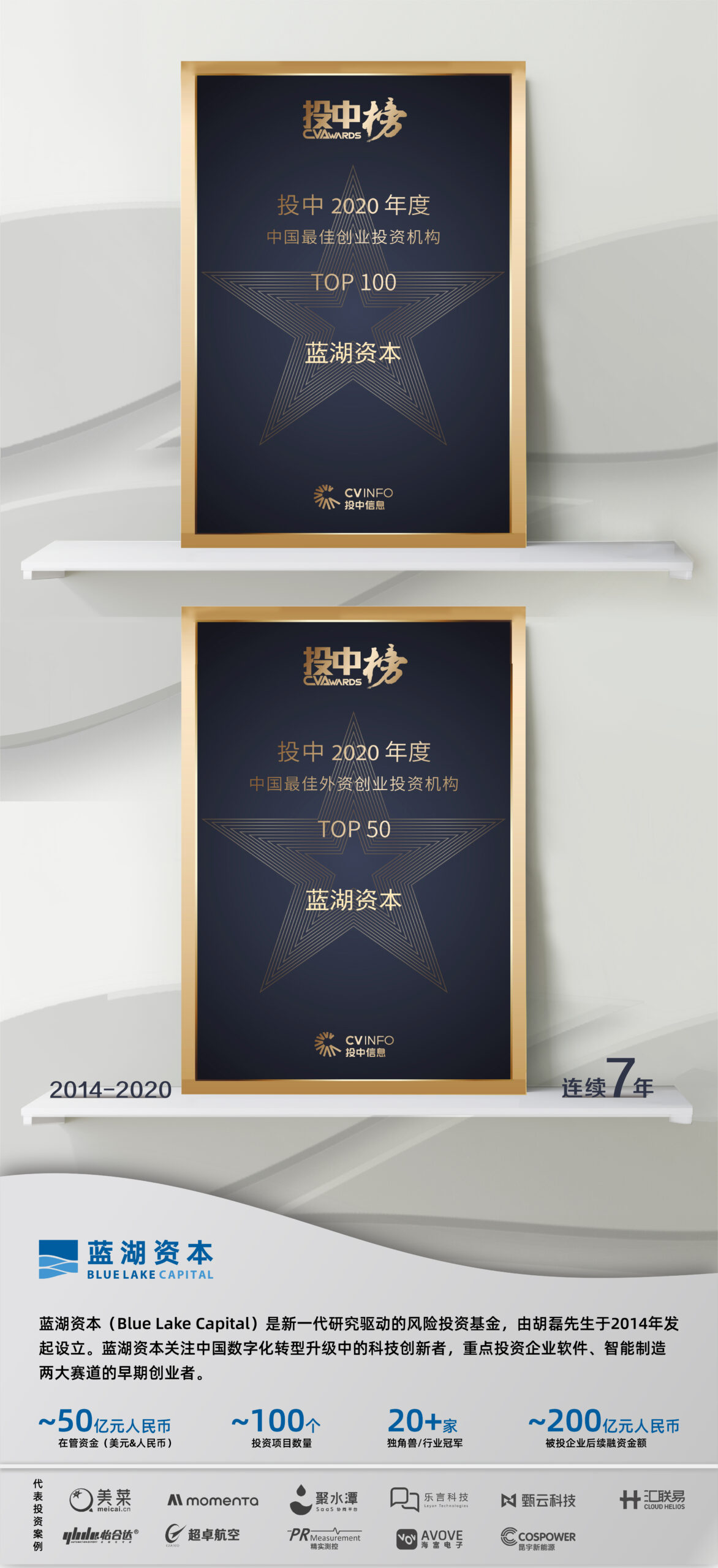
投中信息连续15年作为独立的第三方机构发布中国创业投资机构暨私募股权投资系列榜单——“投中榜”。依托CVSource投中数据,通过投中研究院对数据进行标准化处理,按照总体积分排名评选,覆盖超千家私募股权领域活跃投资机构。该榜单以严格的标准进行榜单划分,以专业、权威和严谨著称,因此又被称为国内股权投资行业的风向标,目前是诸多大型机构LP的重要出资依据。
12 月 30 日,福布斯中国公布“2019年最佳创投人”榜单,蓝湖资本管理合伙人胡磊成功入选。

“福布斯中国最佳创投人” 评选已超过 10 年,榜单旨在挖掘中国最具前瞻性眼光,且能带来丰硕回报的基金投资人。今年,福布斯中国再次启动“2019 年最佳创投人”的评选,继续沿用以往的考察原则,重点考察在过去五年(2015 年 1 月 1 日至 2019 年 10 月 31 日)的项目退出以及未退出项目的发展情况。

蓝湖资本管理合伙人胡磊自风险投资还是新兴行业开始,便投身于此。十多年的时间中,见证了互联网经济的在中国的萌芽、崛起和逐步成为基础设施的阶段,也见证了中国各行各业的科技创新,传统产业与新兴技术相结合的化学反应。2014 年,胡磊创办蓝湖资本,专注投资于以科技创新为导向的新兴行业和传统行业的转型升级,重点关注包括企业软件及服务、消费互联网、智能制造等领域在内的早期成长型企业。胡磊先后投资了美菜、Momenta、汇联易、摩天轮票务等行业领导者。在创办蓝湖资本之前,胡磊任职于 GGV 纪源资本,先后投资了世纪互联(Nasdaq: VNET)、去哪儿(Nasdaq: QUNR)、聚胜万合(被 360 和 A 股上市公司利欧股份收购)、Grab 和美丽说等公司。
去掉在大众所想象的“点石成金”的光环,风险投资人是一份高强度、高投入的职业,一名成熟的风险投资人由智慧、时间、经验和真金白银锤炼,以此穿越周期,战胜市场。
在 36 氪日前发布的 2019 年新经济十大行业投资机构十强榜单中,蓝湖资本荣获「中国企业服务领域最具发现力投资机构 TOP10」、「中国高端制造领域最具发现力投资机构 TOP10」。

企业服务和高端制造领域是蓝湖资本重点关注的两大领域。蓝湖资本管理合伙人胡磊认为,相比高度智能化的消费互联网领域,如移动支付、外卖、电商、网约车等,中国的企业服务领域仍然十分落后,大量细分领域和业务环节亟待互联网改造。随着人力成本的持续走高和云基础设施的成熟和普及,中国大中小企业正逐步意识到SaaS能带来的巨大价值并愿意为此付费。自 2015 年以来,中国的 SaaS 行业保持着近 45%的年复合增长率。经过 5 年的研究和与创业者广泛深入接触,蓝湖团队在企业服务领域积累了大量的 know-how,建立起了从产品、实施、销售、竞争、现金流等多维度的研判体系,已经布局投资了聚水潭、再惠、汇联易、云势软件、虎鲸跳跃、朗镜科技、科探等优质项目。蓝湖资本仍持续积极地在企业服务领域寻找投资机会,期待与能通过互联网、人工智能等技术为中国企业持续创造价值的优秀创业者合作。
在高端制造(智能制造)领域,由蓝湖资本合伙人魏海涛带领的投资小组重点关注“借助软件和算法能力实现数字化和智能化,从而直接提升生产力”的创业机会。目前,在该领域,蓝湖资本已经投资了精实测控和怡合达两大明星项目,正积极寻找在工业软件、高端装备、工业 B2B 等领域的投资机会。
此外,在 36 氪一同发布的 2019 年最受创业者欢迎的投资机构/投资人 TOP100 榜单中,蓝湖资本获得「2019年中国最受创业者欢迎早期投资机构 TOP50」,蓝湖资本管理合伙人胡磊则是连续多年获得「中国最受创业欢迎投资人 TOP100」。
作为行业内具有影响力的新商业媒体,36 氪通过数据调研、采访 3700 家投资机构和中国头部 50 家母基金,整理分析了 3000 个融资项目、近 5000 个融资事件,结合数据调研和母基金访谈,36 氪于 4 月 25 日发布中国创业投资/私募股权行业黑马奖和白马奖以及有限合伙人奖项。蓝湖资本荣获 36 氪“白马奖”—— 「中国最受 LP 欢迎创业投资机构 Top 50」。

2014 年,蓝湖资本带着一个自成体系的独特想法,成为较早一批“自立门户”的 VC2.0 之一,并获得了亚洲最大的私募股权管理基金之一——高瓴资本创始人兼首席执行官张磊先生的投资。蓝湖资本专注于科技创新类企业的早期投资,主张“自上而下研究,自下而上精选”,通过积极的投后管理,重仓头部优秀企业,打造一个高集中度、高收益率的投资组合,为投资人创造超额收益。
目前蓝湖资本旗下管理 3 支基金(2 支美元基金以及 1 支人民币基金),总规模近 20 亿人民币。目前蓝湖资本的投资组合中已经出现了美菜(中国最大的农产品移动电商平台)、斗米(中国互联网灵活用工服务创新领军平台)、Momenta(世界顶尖的自动驾驶公司)、摩天轮票务(国内领先的演出赛事二级交易平台)、聚水潭(国内领先的电商SaaS ERP服务商)、精实测控(服务于世界级制造工厂的精密测试设备厂商)、SIA 国际艺术教育(具有国际影响力的艺术教育集团)等行业领军者。
以下是 36 氪「中国最受 LP 欢迎早期投资机构 Top 50」完整榜单:

优秀的投资机构并非冰冷的金钱机器,也不是隔靴搔痒的企业“鼓励师”,而是以 co-founder 心态陪伴企业家成长的良师益友。资本寒冬之际,仍有人默默耕耘,等待硕果,《投中网》策划投后服务专题,梳理展现 VC/PE 关于投后服务的战略思考、方法论和经典案例。
《投中网》编者按
胡磊创立蓝湖资本时,想要验证以研究驱动早期风险投资的思路。2014 年成立的蓝湖资本广泛涉猎人口结构变迁、宏观经济趋势、产业结构调整等问题,也对业务逻辑、商业模式、财务资本做重点关注,对垂直细分行业的变迁、重点公司的发展轨迹狠下功夫研究,以此去寻找早期的投资机会,他们总结为“自上而下研究,自下而上精选”。
四年过去,蓝湖资本一期美元基金只投资了 15 个项目。对出手快的 VC 来说,达到这个数量只需要半年。随着对行业理解的深入,蓝湖在二期美元基金和人民币基金上加快了节奏,2017 年 Q3 到 2018 年 Q2 投资项目数量已超过一期基金。而已经结束投资的美元一期,有 1/3 的企业成功跑到行业领先地位。
不过,团队仍然有意压制节奏,在如今科技创业的荒原中狩猎,蓝湖更愿意也更擅长扮演“狙击手”。
为什么要在风口迭起的创业大时代,安心做一名看起来效率低的“狙击手”?这是第一个疑问。
有趣的是,这家基金在资金分配上也采取了业内并不常见的方式:一半的钱用来投新项目,一半的钱用来追老项目;而用于投老项目的那一半里,绝大多数都投给了前一二名的项目。“重仓赢家”的策略也意味着,蓝湖资本在选项目上不能允许任何模棱两可,容错率很低。
如何保证投资企业能够满足投资回报率需求?这是第二个疑问。
行业盛传 2018 年的冬天难熬,机构和企业都要放缓节奏,抓紧囤粮。在此时境下,蓝湖资本对“狙击手型VC”做出了解释,投资想要创造价值是要花时间的。胡磊相信一个心理学上的理论——“决策疲劳”,一个人做的决定越多,损失的意志力、自律和自控力也就越多。在决策疲劳期大脑会停止对远景的长期关注,而开始关注即刻的回报,大脑就会开始寻找捷径。胡磊认为“一口气吃下太多项目,要么新项目投不好,要么老项目管不好,左右都会痛苦而低效。倒不如踏实研究,主动约束投资节奏,把时间抽出来做投后工作,保证持续而稳健的收益。”
这事说起来容易,做起来难。投资人的兴奋点天生是追逐风口。但 VC 行业,好玩之处在于它千人千面。你以什么样的身份参与其中,就决定了行业能够带给你什么样的回馈。你把投资当作赌博,追求高风险、高回报,那么衡量投资好坏就是一道单纯的投资回报率计算题。但如果你相信投资是创造价值,最终一定会收获不一样的东西。
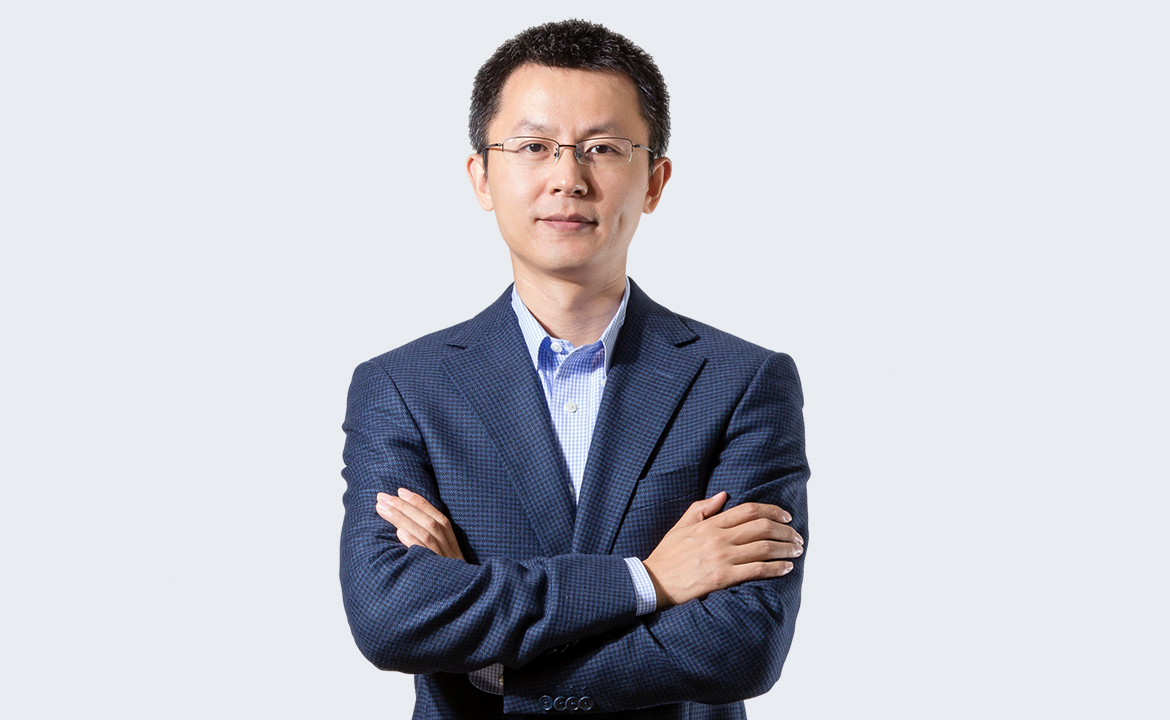
蓝湖资本想要扮演怎样的角色?入行12年的胡磊的答案一直是——做一支不仅仅是发现价值,还要创造价值的风险投资基金。
唱唱“反调”
人们往往认为一家企业的盈利方式,是投资人在投前就该思考清楚的事情。但变化是初创企业的天性。严格意义上说,投前的判断极少能够一步到位,更大的功夫可能在投后。胡磊引用 ARD(American Research and Development Corporation,美国研究与开发公司) 创始人Georges Doriot的一句话:“选择一家公司是比较容易的,而帮助一个公司经历其成长的痛苦则是最困难的。”
在投后工作中,胡磊不想扮演“啦啦队”的角色,“CEO做了什么,你都说好,真棒,加油,这没有什么意义”。胡磊坚持站在公司的角度思考问题,而不能仅仅代表基金利益,“因为在公司里,投资人的身份首先是一个股东,必须代表全体股东利益。”
“要有说“不”的勇气。”胡磊说,CEO可以心怀星辰大海,偶尔热情冲动,但投资人必须沉着冷静,基于研究事实做出判断。
从 2016 年领投美菜 A 轮算起,到美菜成为中国最大的农产品移动电商平台之前,胡磊对美菜 CEO 刘传军说了很多次“不”。印象最为深刻的两次,与现金流和前端品牌相关。
一次是在投资后不久,考虑到美国市场的经验,胡磊建议刘传军专注于现款现结的中小规模单体餐厅。美菜网刚刚起步,拖不起账期和现金流,必须忍忍短痛,“断臂求发展”。
另一次是在刘传军想把油、米、面、鸡蛋等品类分离成为不同品牌,各自单独运营的时候。就像宝洁集团有海飞丝、飘柔,可口可乐集团有美汁源、冰露等品牌那样,美菜网也可以让旗下各品类用独立品牌,为将来单独拓展留下空间。
“这不是从客户角度思考的结果。”胡磊说,刘传军的设想只有在不同品牌对应不同目标用户时才可以实现。如果用户群体是相同的,前端的品牌分化没有任何意义。“谁愿意在美菜网上买的东西都是些杂牌呢?”
董事会一度对此有争论。胡磊花了不少时间去慢慢说服。最终,刘传军接受了胡磊和其他董事们的建议,决定把美菜这一个牌子做到底。在蓝湖资本投资半年后,美菜跑到了市场第一的位置上。据彭博社报道,美菜网最新的估值已经达到了 70 亿美元。而曾经围着大客户打转的老对手们,陆续被现金流和其他管理上的细节问题拖垮了。
刘传军用“睿智”和“缜密”两个词来形容蓝湖的合伙人,“蓝湖合伙人就像我的联合创始人一样,每时每刻帮我分担很多事情,经常忙到凌晨。他们真的是创业最好的伙伴。”
另一种需要及时说“不”的情况是:一个 CEO 刚刚结束上一段并不成功的尝试,迫切投入到新事业中来,思维发散,对各方向的业务都跃跃欲试。
胡磊观察,“刚刚跌倒的人都很着急爬起来”,但投资人此时要“按住他”,不断地让他思考“生意最终能做成什么样”。而通常情况下,一段时间后 CEO 的情绪会向反方向发展,觉得市场四面埋伏,自己什么事情都做不了。到这时,投资人再以积极心态和 CEO 一起分析行业机会,鼓励他大胆尝试。
2014 年,蓝湖资本投资了一个做校园社交的项目。一年后,团队因产品模式问题而选择从头再来。但第二次尝试仍然以失败告终。CEO 的心态经历了几番波动,但现在,这个团队所做的第三款产品“快点阅读”已经步入正轨,获得了百万美元 A+轮融资。
基因里的“研究型”投资人
蓝湖资本自成立之初,就定位于“新一代研究驱动的风险投资基金”。投后工作和基金总体风格强烈挂钩。投前的研究视角,也延伸到了投后为企业提供的建议中。半年前,摩天轮票务 CEO 崔杰夫问了胡磊一个问题:“我们是不是把事业做窄了?”摩天轮票务已经是中国最大的演出赛事二级交易平台了,崔杰夫有这样的以为,是因为他感受到票务平台在中国的演艺生态中位置很低,总是被主办方牵着鼻子走。而在美国,有一家既组织演唱会、又搞票务的公司,市值已经超过了一百亿美元。
要不要延伸产业链上游的事业?董事会中有不同的意见。有人认为需要等到摩天轮票务的业务再增长至少50%后,再去做需要真金白银砸钱拓路子的事情。特别是中国的演艺行业水很深,而摩天轮票务的团队多半是工程师出身,要撑起这件事,难度不小。
“我们分析了美国市场的对标公司,从业务管理到供应商管理,每个环节寻找参照物,分析两个市场的异同。最终认为,短期的风险值得冒。”胡磊支持崔杰夫的想法,帮助他一起说服了其他投资人。
但对标美国市场,不能只看面子不看里子。否则,美国的成功企业就仅仅是“一贴安慰剂”:它能告诉你哪里有做出成功企业的机会,但具体到一家企业身上,这家企业在成长中克服了什么困难,局外人并不知情。
行业里到底发生了什么事,这些事有多棘手,该如何解决?对这些问题“没有足够深的理解,很容易误导公司”,胡磊说。投资人往往要和企业共同经历过一段“痛苦”的时间,才有可能摸清楚企业经营的要点和要害。
2016 年 9 月,蓝湖资本投资了一站式商旅及费用管理 SaaS 平台“汇联易”。这笔投资对标的是美国差旅科技巨头 Concur。成立于 1993 年的 Concur,在 2014 年被软件业巨头 SAP 以 83 亿美元的价格收购了。被收购时,Concu r的年收入超过 7 亿美元。在 to B 行业,能做到这个量级的公司凤毛麟角。
汇联易也是瞄着 Concur 去做的。但做了不久,就频繁被客户抱怨项目实施周期太长,需要半年时间才能上线。这中间是不是出现了什么问题?企业曾有过自我怀疑,直到胡磊通过梳理 Concur 的数据发现——其项目上线周期和汇联易基本雷同,盈利状况相似,大家才放下心来,也让公司更有底气去管理客户的预期。
“我们去和 CEO 交流时,一定要给他一些他在公司里得不到的东西。讲产品使用体验会有些用处,但我如果公司团队足够健壮的话,‘外人’很难对它的具体业务产生实质性影响”,胡磊说。
胡磊曾在年初的博客里写道,做投资人,要清楚地知道我是谁,我擅长什么,并对这个问题保持足够的敬畏感,持续做出自我修正。能否真正跳出具体业务,帮助 CEO 分析行业基本面和发展空间,才是对职业投资人的挑战。
舍得下“慢功夫”
VC 要花多少力气在企业长期价值塑造上?在大部分 VC 内部,这是件纠结事,持股比例、人力成本等等都会影响问题的答案。在蓝湖,投后从来都是件需要团队合力作战的事。除了投资团队,蓝湖的投后团队还包括曾在去哪儿网出任总裁和 CFO 的孙含晖,曾在聚胜万合集团出任 CFO 的唐舜骅等等。胡磊精力有限,只能“盯着”企业 CEO,要想及时了解企业真实状况,还需要投后团队去听 CEO 身边销售、市场、财务、产品几个关键岗位上的人的意见,互通有无。
和投前做决策时有模型、数据支持,有系统方法论不同,投后工作更多融合在日常的琐碎事项中,是一个长期行为。
比如初创企业往往对招聘问题最感到棘手。CEO 想找“志同道合”的人,但现实却是一盆冷水:早期公司限于资金有限,开不出高薪水,只能给理想人选提供股份,而对方却又常常不觉得这些股份值钱;等到公司做到 B 轮、C 轮的时候,资金虽然有了,但此时招新高管进来,岗位的设定、工作内容的划分、薪酬架构的调整,过程充满风险,一不小心就会出岔子。
蓝湖资本花很大的精力来搭建自己的人际关系网络,以自己为枢纽站,连接 10 余年投资生涯中的种种能人,发散寻找那些能够帮助公司的人,积极主动地帮助创业者物色人才。比如帮助小米生态链旗下个护家电品牌须眉科技引入欧莱雅集团的品牌高管;帮助美菜引入沃尔玛中国区负责人担任仓储物流方面业务顾问。
不过发动人脉,帮助公司去请行业里非常资深的高管只是第一步。
更重要的是,投资人要像医生一样帮公司诊断问题,制定人才方面的改良方案——招不到合适的人是为什么?“把应聘者从发简历、面试、到接受 offer 的过程看作漏斗,去分析漏斗转化率低的原因,是应聘者不认同公司文化,公司提供的薪酬没有吸引力,还是仅仅因为高管团队在该出现时没有出现?”胡磊说,很多 CEO 没有管理公司的经验,细枝末节上的事情,“你要和他一次次地讲,慢慢地他就听进去了”。
自动驾驶公司新晋独角兽 Momenta 网罗了众多无人驾驶领域的专业人才。一次与 CEO 曹旭东的聊天中,曹旭东讲述了对两种绩效管理方式 KPI 和 OKR 的理解和实践,让胡磊感觉“挺欣慰的”。“我很难听到一个工程师能够这样解读问题,从 2016 年 1 月领投天使轮至今,大家对重要事情的解读在一步步深化。”
投资的成就感是真金白银、掷地有声的,而投后工作却是“润物细无声”的慢功夫。蓝湖被投企业溢米辅导 CEO 李晓峰评价蓝湖团队,“本来想找一个投资人,却意外收获了一个合伙人”。但胡磊觉得自己在投后工作上的角色更像是“副驾驶”,为高速驾驶中的CEO提供视野之外的信息,及时风险警示,确保行驶在正确的道路上,一起开向建立一家伟大企业的目标。
2018 年 8 月 9 日,《第一财经周刊》“2017 年至 2018 年度中国创投机构排行榜”正式揭晓,中国本土当之无愧最优秀的 50 家风险投资机构在此集体亮相,蓝湖资本作为成立不到五年的新基金,也位列其中,深感荣幸。

正如《第一财经周刊》在文章中所写,一旦去掉风险投资行业在外界想象中“点石成金”的那些光环,它的发展规律实际上同样符合查理·芒格所说的“冲浪型公司”的状态。推动或淹死投资人的,可能是一轮更大规模的发展浪潮,也可能是迅速消退的泡沫。我们作为投资人都希望能在浪尖上维持微妙的平衡,更要寻找穿透更多次浪潮周期的机会。
今天,行业面对的已经是经济复苏乏力、全球性问题加剧的外部环境,以及资管新规落地、“新经济”模式崛起等一系列国内市场的变化,中国创投机构已处于更为复杂的竞争格局,底层资产、投资逻辑和创业生态都将因此受到深远影响。
“2017 年上半年股市上投资冲动很强,不管是私营企业、资管机构还是政府都比较乐观,甚至是亢奋。到了下半年,市场风向 180 度转弯,很多投资人和 LP发现自己的锁定周期变长了,热情就消退了。先前投资的时候他们都说对企业有耐心,后来就会开始着急。这样的市场变化,正好可以把没有耐心的机构先筛出去。”胡磊认为 2017 年对于分析投资机构的能力来说,其实是个很好的时间点。
蓝湖资本一直主张研究驱动投资,锚定而后动,其投资风格被形容为“快准狠”。在接受《第一财经周刊》的采访中,蓝湖资本管理合伙人胡磊表示,“研究驱动”并不是保守的代名词,实际上蓝湖资本一度将 2/3 的账面资金,投在了选中的前 5 个项目上。“早期项目的随机因素比较多,很难在 A 轮就看到未来 5 年的状态。但有一些大趋势,比如人口红利萎缩、劳动力短缺,是一定会到来的,我们锚定要投准的,就是这类项目。”
成立 4 年来,蓝湖资本已经投中了多个细分行业冠军,如中国最大的农产品移动电商平台——美菜网;中国互联网灵活用工服务创新领军平台——斗米;中国领先的智能金融科技公司——前隆科技;世界顶尖的自动驾驶公司——Momenta;国内领先的现场娱乐票务二级交易平台——摩天轮票务。
未来,蓝湖资本延续研究驱动的投资风格,继续发掘有潜力的创业者,以 CEO 咨询顾问身份,帮助企业解决经营中的挑战和难题,助力其成长为行业领军者。

